
Fixed Income Investing
O que o relatório inclui
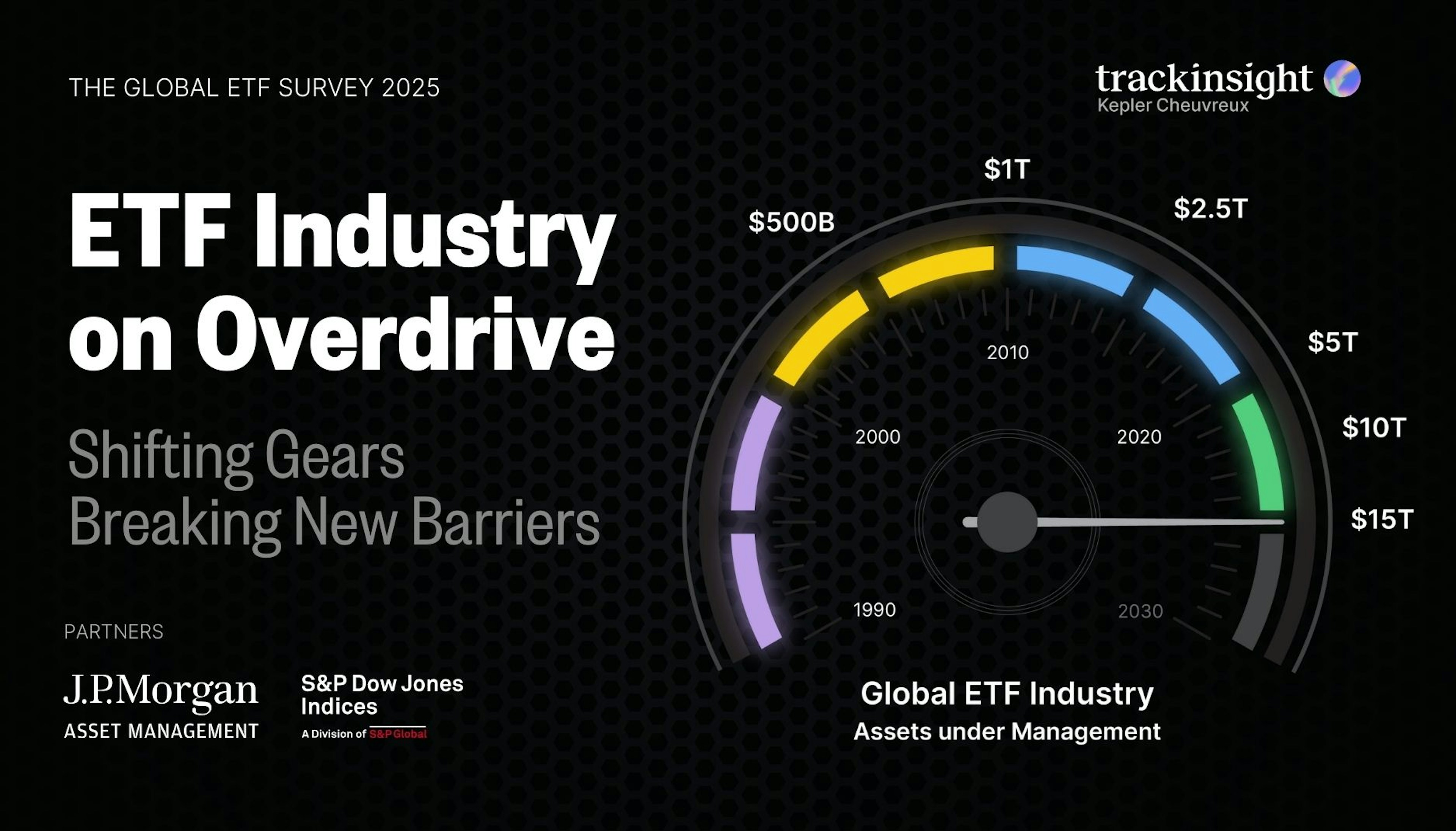
- 600+ investidores (US$ 1,1 tri em ETF)
- Tendências quentes: renda fixa, cripto, ESG
- 80+ previsões para 2025
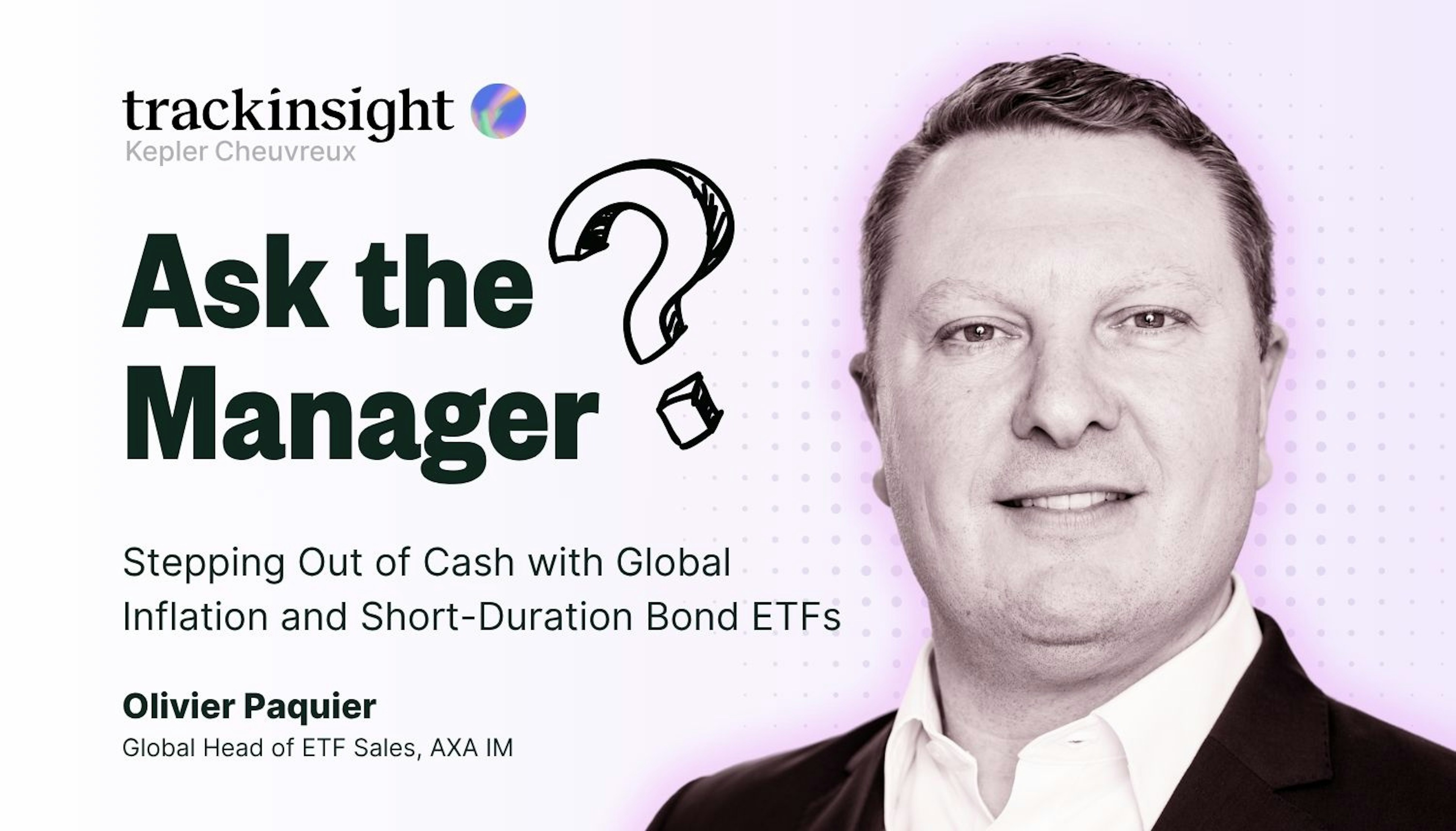
Ask the Manager: Stepping out of Cash with Inflation and Short-Duration ETFs
As investors rethink cash allocations amid falling rates, AXA IM’s active Global Inflation and Global Corporate Short Duration ETFs offer liquid, diversified solutions for today’s fixed income landscape.

Por AXA Investment Managers
16 de outubro de 2025
- AXA Investment Managers
- Fixed Income
- Active
- Inflation
In this edition of Ask the Manager, Olivier Paquier, Global Head of ETF Sales at AXA Investment Managers, shares his insights on how investors can navigate today’s shifting rate environment through active fixed income ETFs. With central banks easing policy and inflation proving more resilient than expected, Paquier discusses the opportunities in global corporate short-duration and inflation-linked bond strategies. He explains how AXA IM’s active approach, combining fundamental research, quantitative analysis, and disciplined risk management, seeks to deliver efficient “step out of cash” solutions for investors looking to balance yield, liquidity, and inflation protection within their portfolios.
The US Federal Reserve (Fed) has just cut rates for the first time in almost a year. How are you reading the macro backdrop, and what are the key risks and opportunities you see in fixed income today?
There is evidence that US trade policies are weighing on the US economy. Inflation has been higher since the end of Q1 and the labour market has softened, but a recession is not the core scenario in the US. In this context, we see policy uncertainty as a key risk. Separately, a more pronounced slowdown and a potential equity-market correction could weigh on credit spreads; nevertheless, fixed income returns have been positive in 2025, with income the biggest contributor.
We maintain a constructive view across most credit asset classes. Corporates are delivering solid performance and preserving margins, which supports further tightening of credit spreads. Excess returns are positive in both investment grade and high yield. In investment grade, outright yields look attractive as central banks continue to ease and fundamentals sustain healthy investor demand, while high yield offers a steady income stream but carries valuation risk and could react negatively to surprising data or policy developments.
Shorter-dated inflation-linked bonds have also continued to perform well. The Fed is facing the potential of slower growth and a period of elevated inflation, with US inflation near 3%. We expect inflation to persist into 2026, which could limit the Fed’s ability to hit both mandates. This situation should mean that real yields remain attractive as the Fed reacts to slower growth. In the UK, real yields remain elevated, though volatility could rise if the budget surprises markets.
Emerging markets have also performed well despite ongoing global trading-system uncertainties and China’s softness, drawing significant inflows. Inflation is generally lower, which allows for rate cuts that benefit local bond markets.
Can you describe the unique active management approach AXA IM applies in your two recently launched fixed-income ETFs offering exposure to Global Inflation and Global Corporate Short Duration? Specifically, how do you leverage fundamental research, quantitative analysis, and risk management to deliver differentiated outcomes compared to passive or other active fixed income strategies?
Significant inflows into actively managed fixed-income ETFs, we believe, signal a structural shift as investors seek the flexibility of fixed-income mutual funds with ETF efficiency—liquidity, transparency, diversification, and accessibility—over pure passive exposure.
All our active ETFs are integrated with fundamental management teams. Drawing on AXA IM’s three decades of recognised expertise in fixed-income investing and active portfolio management (portfolio managers, credit analysts, trading platform, macro research), we identify relative-value opportunities across markets and generate value through strategic reallocations, accessing opportunities beyond passive strategies.
We are once again taking a bold, innovative step with the launch of the first actively managed Global Inflation-Linked and Global Corporate Short-Duration Bond strategies in the UCITS market. We are committed to differentiating our ETF range from peers and offering highly competitive pricing for our strategies—just a few basis points above passive options and significantly cheaper than mutual funds.
Employing a Buy-and-Maintain approach to generate income and blend value in a Global Corporate Short-Duration Bonds strategy is a distinctive stance in the UCITS market. The goal of Buy-and-Maintain investing is to capture credit returns over a full market cycle, aiming to outperform the credit universe with limited downside risk. Such an approach also targets low active turnover, aiming for around 15–20% per year on average. This means it favours natural turnover to adjust and reposition the portfolio while preserving its core characteristics.
Conversely, the Global Inflation-Linked Bonds strategy leverages the same proven process as our mutual funds. Depending on market conditions and the inflation outlook, we manage positioning along the inflation-linked yield curve, interest-rate sensitivity, and regional exposure. This strategy focuses on a maturity exposure of 1-10 years.
Mais artigos


Sobre o Trackinsight
Trackinsight é um fornecedor líder de dados e tecnologia sobre ETFs, capacitando instituições a tomarem decisões informadas na seleção de ETFs, construção de portfólios e otimização.
Desde a nossa fundação em 2016, estamos na vanguarda da indústria, oferecendo ferramentas acessíveis, abrangentes e confiáveis para apoiar as necessidades em constante evolução dos investidores.
Ao longo da última década, a Trackinsight expandiu suas operações em seis países, atendendo milhares de investidores profissionais. Temos inovado consistentemente para fornecer soluções de ponta que atendam às demandas em mudança do mercado de ETFs.
Em 2024, a Kepler Cheuvreux, uma importante empresa independente de serviços financeiros europeia, adquiriu uma participação majoritária na Trackinsight, tornando-se o principal acionista da empresa.
Essa parceria estratégica solidifica a posição da Trackinsight como um fornecedor de destaque de ferramentas de seleção e análise de ETFs, enquanto fortalece o compromisso da Kepler Cheuvreux em se tornar um jogador de destaque no setor de ETFs.
Juntos, estamos comprometidos em oferecer serviços avançados que capacitem investidores profissionais, consultores, instituições e emissores. Este novo passo nos permite fornecer soluções tecnológicas ainda mais abrangentes e inovadoras, levando o investimento em ETFs a novos patamares.
Mais sobre o TrackinsightFerramentas ETF
PLATAFORMA
Notícias e pesquisas sobre ETFs
SOLUÇÕES PROFISSIONAIS
SOLUÇÕES PARA
Política de privacidade | Política de bolachas | | Termos de uso | Impressão