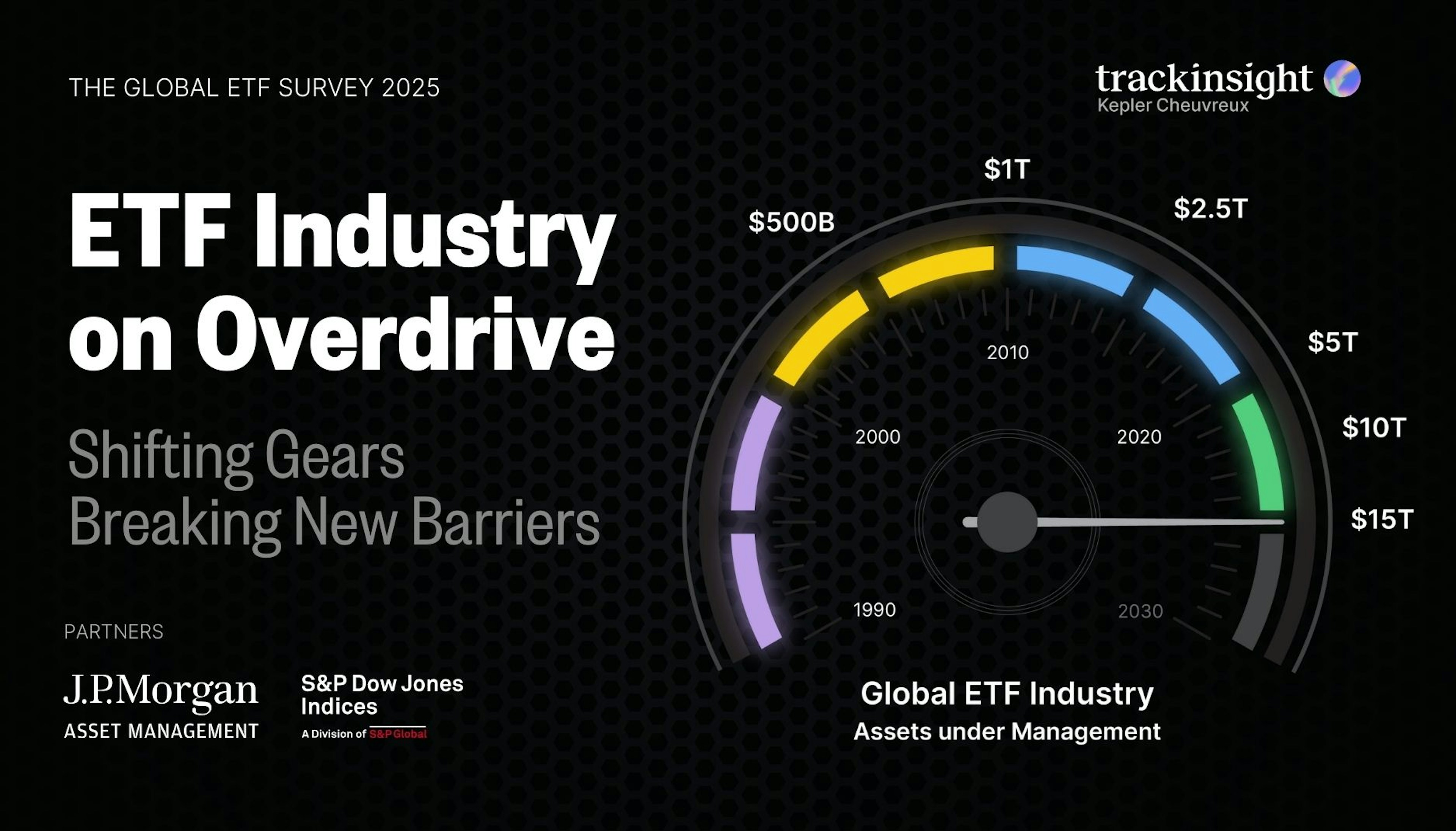
O que o relatório inclui
- 600+ investidores (US$ 1,1 tri em ETF)
- Tendências quentes: renda fixa, cripto, ESG
- 80+ previsões para 2025
Ask the Manager: Paul Marino on Europe’s Defense Renaissance and What It Means for Investors
From AI to ammunition, the defense sector is undergoing a seismic shift.


Por Trackinsight
4 de abril de 2025
- Themes
- Defense
Publicidade
Paul Marino, Chief Revenue Officer at Themes ETFs, joins our Ask the Manager series to discuss how rising global defense spending, renewed geopolitical tensions, and Europe's push for military independence are reshaping the defense sector—and what it all means for investors.
How is rising global defense spending driving growth in the sector, particularly in light of recent geopolitical tensions?
Following the Cold War, European defense spending has been insufficient and the beginning of the war in Ukraine, have exposed severe deficiencies in military infrastructure and ammunition stockpiles. European leaders increasingly recognize that relying on Washington for security is no longer a viable long-term strategy.
Calls for Europe to achieve independence from U.S. military support have grown louder, with efforts focused on increasing defense spending, strengthening military readiness, and continuing support for Ukraine.
A major topic of discussion is the development of a European nuclear deterrent, one that would exist outside of U.S. control to ensure Europe’s security regardless of Washington’s stance.
A major concern has been Europe’s fragmented defense industry, which struggles to produce equipment at the necessary scale and speed. By centralizing procurement through a European Military Sales Mechanism and securing multi-year orders, European defense companies will gain stability and the ability to ramp up production.
This move will also keep high-value jobs, research, and innovation within Europe, rather than outsourcing defense needs to non-EU countries.
From a defense contractor perspective, Europe would be wise to diversify away from its massive dependence on US defense contractors and begin to rely more on European defense contractors.
That will be a slow transition for sure as US companies have an acknowledged advantage when it comes to might, capabilities, technology, and innovation.
That said, the overall increase in spend from Europe is a tide that should raise all boats, US and European companies included, as a greater investment commitment across the board means the defense complex as a whole will benefit.
What impact could the €800 billion ReArm Europe initiative have on European defense contractors and the broader industry?
Germany's upper house has voted in favor of a landmark bill that aims to unlock hundreds of billions of euros for defense and infrastructure projects. The vote passed with 53 out of 69 members in favor—well above the 46 required for approval.
Publicidade
This marks a significant shift from previous policy and highlights how Trump's push for Europe to invest more in its own defense has had a major influence on European decision-making.
Could a swift resolution to the Ukraine-Russia war derail Europe's long-term defense investment plans?
There’s always a risk that Europe won’t follow through if the conflict is resolved, but I would urge caution.
Any resolution will likely involve territorial concessions to Russia, a shift toward more diplomatic ties with the U.S., and could further reinforce the Trump administration’s view that Europe must take greater responsibility for its own defense—or at least contribute a much larger share to the collective effort.
Moreover, such a resolution could have long-term implications for NATO, potentially weakening its perceived ability to deter future Russian aggression.
As cybersecurity threats intensify, how are defense companies responding, and what are the implications for investors?
Cybersecurity is a cornerstone of global defense investment, as modern defense systems increasingly rely on advanced technologies such as artificial intelligence, the Internet of Things (IoT), and autonomous systems.
These technologies are integral to national security, and any breach could result in espionage, sabotage, the theft of sensitive military information, or even the complete shutdown of critical defense operations.
Effective cybersecurity safeguards military infrastructure, communication networks, and classified data, while also acting as a deterrent against potential cyberattacks from adversaries.
With modern warfare evolving—through drones, AI, and vulnerabilities exposed in conflicts like Ukraine-Russia and Israel-Hamas—what next-gen technologies are emerging, and which companies are best positioned to benefit?
Today, the defense industry is undergoing rapid transformation driven by technological advancements. Five key technologies are reshaping the sector:
Publicidade
- Robotics and Autonomous Systems – Unmanned aerial vehicles (UAVs), autonomous underwater vehicles (AUVs), and ground robots are revolutionizing military operations. These systems can perform surveillance, carry out high-risk missions, and provide logistical support—all while reducing risks to human life.
- Artificial Intelligence (AI) – AI is transforming multiple aspects of defense, from threat detection to strategic decision-making. One of its key strengths is the ability to process vast amounts of data to deliver real-time situational awareness.
- Cybersecurity – As digital systems become more integral to defense, cybersecurity has become a top priority. Defense organizations worldwide are investing heavily in cybersecurity technologies to safeguard networks, communication systems, and critical infrastructure from cyber threats.
- Advanced Materials – Breakthroughs in material science are resulting in lighter, stronger, and more durable equipment. These materials are being integrated into body armor, aircraft, vehicles, and more, enhancing performance and survivability.
- 3D Printing – Additive manufacturing is transforming defense logistics by enabling the on-demand production of parts and equipment. This reduces reliance on traditional supply chains and increases flexibility in the field.
How do tariffs impact defense contractors’ supply chains, and what strategies are they employing to mitigate these effects?
Tariffs may encourage European nations to prioritize investments in their own defense companies, aiming to maximize return on investment, maintain control over development, and support domestic production pipelines and infrastructure buildout.
However, U.S. defense companies continue to hold significant advantages in innovation, design, technology, and overall capabilities. As a result, European governments will need to carefully weigh these factors when deciding how and where to allocate defense resources.
How does the Themes Transatlantic Defense ETF (NATO) provide targeted exposure to the growing defense sector, and what sets its index methodology apart?
The Themes Transatlantic Defense ETF (NATO) may appeal to investors seeking targeted exposure to aerospace and defense stocks amid heightened geopolitical tensions. The fund tracks the Solactive Transatlantic Aerospace and Defense Index (SOLNATON), which includes aerospace and defense companies headquartered in NATO member countries.
NATO currently provides exposure to 65 aerospace and defense firms, with approximately 40% based outside the United States. This contrasts with many competing ETFs that tend to have significantly lower allocations to non-U.S. companies.
What are the top holdings in the NATO ETF, and what justifies their overweight allocations?
The top holdings in NATO include Rheinmetall, Rolls-Royce, Airbus, Honeywell, and Northrop Grumman. Their weightings in the fund reflect a combination of their relative market capitalizations and recent outperformance compared to the broader market.
Can you spotlight some of the smallest holdings in the NATO ETF and their growth potential in the defense space?
The smallest holdings in NATO include Virgin Galactic and Smith & Wesson, reflecting their relatively smaller market capitalizations. Given the current geopolitical environment, which continues to favor aerospace and defense firms, growth prospects for all holdings within the ETF remain strong.
Were the U.S. to do the unthinkable and withdraw from the NATO alliance, it could prompt even greater aerospace and defense spending from the remaining member states—a remote but plausible scenario that many are already hedging against through significantly increased defense budgets.
While such a development would be deeply unsettling for the global geopolitical landscape, it would likely benefit the current holdings of the Themes Transatlantic Defense ETF (NATO).
About Themes ETFs
Themes ETFs is a forward-thinking U.S. ETF provider specializing in thematic, sector-specific, and leveraged single stock ETFs. The company's products are designed to offer investors targeted exposure to high-growth areas of the economy, supported by rigorous research and advanced indexing methodologies. Themes ETFs was founded in 2023, as the US sister company of Leverage Shares – the European leader in leveraged and inverse ETPs. For more information, visit www.themesetfs.com.
Please note this article is for information purposes only and does not in any way constitute investment advice. It is essential that you seek advice from a registered financial professional prior to making any investment decision.
Mais artigos


Sobre o Trackinsight
Trackinsight é um fornecedor líder de dados e tecnologia sobre ETFs, capacitando instituições a tomarem decisões informadas na seleção de ETFs, construção de portfólios e otimização.
Desde a nossa fundação em 2016, estamos na vanguarda da indústria, oferecendo ferramentas acessíveis, abrangentes e confiáveis para apoiar as necessidades em constante evolução dos investidores.
Ao longo da última década, a Trackinsight expandiu suas operações em seis países, atendendo milhares de investidores profissionais. Temos inovado consistentemente para fornecer soluções de ponta que atendam às demandas em mudança do mercado de ETFs.
Em 2024, a Kepler Cheuvreux, uma importante empresa independente de serviços financeiros europeia, adquiriu uma participação majoritária na Trackinsight, tornando-se o principal acionista da empresa.
Essa parceria estratégica solidifica a posição da Trackinsight como um fornecedor de destaque de ferramentas de seleção e análise de ETFs, enquanto fortalece o compromisso da Kepler Cheuvreux em se tornar um jogador de destaque no setor de ETFs.
Juntos, estamos comprometidos em oferecer serviços avançados que capacitem investidores profissionais, consultores, instituições e emissores. Este novo passo nos permite fornecer soluções tecnológicas ainda mais abrangentes e inovadoras, levando o investimento em ETFs a novos patamares.
Mais sobre o TrackinsightFerramentas ETF
PLATAFORMA
Notícias e pesquisas sobre ETFs
SOLUÇÕES PROFISSIONAIS
SOLUÇÕES PARA
Política de privacidade | Política de bolachas | | Termos de uso | Impressão