Trackinsight Enterprise, a unified platform for institutional ETF research, analytics, and compliance, is now live. Explore Trackinsight Enterprise →
Help us improve your experience. Please confirm your investor type:
The ETF Industry Is Evolving Fast
From AI infrastructure to active strategies, the ETF landscape is shifting. Share your perspective in the 7th Annual Global ETF Survey.
Top 10 best ESG ETFs: Understand ESG scores
Are you looking for the best ESG ETFs for your portfolio? In this article, we explain what factors impact ESG ratings for ETFs to help you in your selection.

By Thomas Paratore
June 1, 2021
- Best ESG ETFs
- ESG Scores
Advertisement
Are you looking for the best ESG ETFs for your portfolio? You might want to improve the ESG footprint of your existing portfolio or create another focused on sustainability. In this article, you will learn what factors impact ESG ratings for ETFs to help you in your selection. Let’s start by taking a look at the best rated ETFs.
Trackinsight’s ESG Observatory shows over 130 ESG ETFs rated A+ or A, the best grades according to our partner Conser’s ESG ratings methodology.
ETF Data Built for Precision
Trackinsight delivers reliable and comprehensive coverage on 14,000+ ETFs
The most common strategies in the top-rated categories are Best-in-Class and Thematic strategies. Best-in-class strategies select the most sustainable companies or ‘leaders’ across sectors. Thematic ESG strategies select companies to reflect a given sustainability theme. Those two ESG strategies have both proven to deliver great improvements versus their non-ESG peers. This means they could be a great starting point for your ETF selection if you are trying to improve your portfolio’s ESG score.
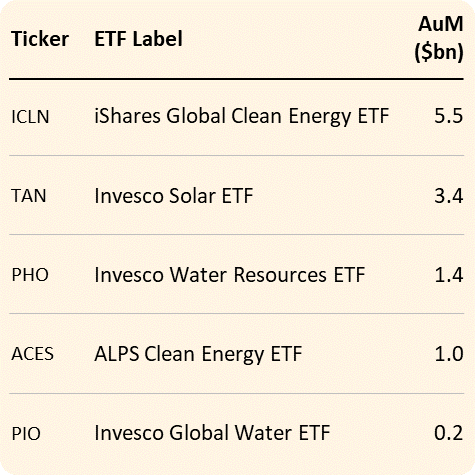
Top 5 A+ rated ESG ETFs available in the US, ranked by assets
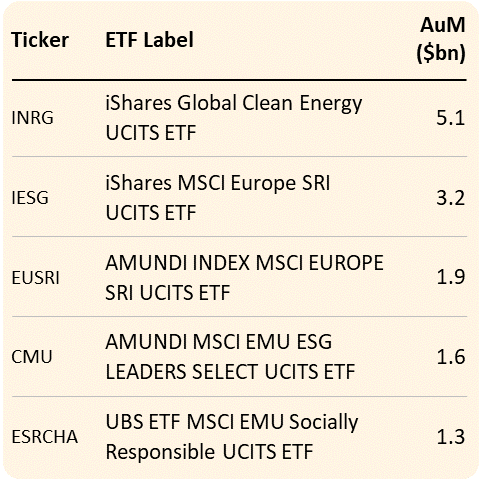
Top 5 A+ rated ESG ETFs available in Europe, ranked by assets
Interestingly, there are also over 450 ETFs that do not focus on sustainability but score well on ESG criteria (A+ and A ratings). This poses the question: outside of adopting an explicit ESG strategy, what helps an ETF score well in ESG?
Developed markets offer better ESG data than Emerging
Across all asset classes, there is one common denominator behind ETFs with good ESG scores: the exposure to developed markets.
Developed markets seem to offer better access to ESG data, with more companies reporting and a higher degree of disclosure. Companies in developed markets are also shifting their practices faster to meet ESG standards (such as United Nations’ Sustainable Development Goals).
By contrast, emerging markets pose more challenges with ESG investing. It goes beyond having lesser standards for ESG reporting. Emerging markets usually have a higher proportion of lower ESG-rated companies. Since great ESG companies are more singular in emerging markets, ESG ETFs in those regions tend to have lower ESG ratings and higher exposures to controversial themes.
More research from Trackinsight shows the challenges ahead for ESG investing in emerging markets.
Advertisement
Large companies have better ESG ratings than smaller ones
Looking at specific asset classes, we find that Equity ETFs with the best ESG ratings are concentrated on stocks with large and mid-capitalizations. Those well-known companies get more visibility and are subject to more investor and regulatory scrutiny, pushing them harder to adopt certain standards in line with ESG expectations. For those established companies – environmental, social and governance issues tend to become dominant concerns.
Bonds ETFs see the same pattern. Investors will find the majority of highly rated bonds ETFs focus on bonds issued by governments or investment-grade companies from developed markets. As for equities, bonds issuers from developed markets have both more scrutiny and more wealth, which makes them focus on sustainability issues.
Finally, ESG is factored in by credit rating agencies which creates a positive correlation between credit ratings and ESG. Research shows that this trend is especially visible for sovereign debts. Government debt from developed countries is more likely to have a better ESG score than other sovereign emerging market debt. With the increasing awareness to climate change, many of those countries have signed the Paris-Agreements tilting their efforts and investments to improve sustainability for generations to come.
Conclusion
ETFs can help you have a positive ESG impact on the world through your investments. Sustainability issues are particularly addressed by developed market companies and governments. They are subject to important investors and regulators scrutiny. You will probably find that crafting your portfolio around sustainability means taking on more exposure to developed markets as well as large companies.
Our ESG scores are here to help you get closer to your sustainable investment objectives. They are computed over thousands of ETFs, regardless of whether they implement an ESG approach or not.
Find your gem among over 750 ESG ETFs and monitor sustainable investment trends on our ESG Observatory.
More articles


About Trackinsight
Since our founding in 2016, we have been at the forefront of the industry, delivering accessible, comprehensive, and reliable tools to support the evolving needs of investors.
Over the past decade, Trackinsight has expanded its operations across six countries, serving thousands of professional investors. We’ve consistently innovated to provide cutting-edge solutions that meet the changing demands of the ETF market.
In 2024, Kepler Cheuvreux, a leading independent European financial services firm, acquired a majority stake in Trackinsight, becoming the company's principal shareholder.
This strategic partnership solidifies Trackinsight's position as a premier provider of ETF selection and analysis tools, while strengthening Kepler Cheuvreux’s commitment to becoming a leading player in the ETF sector.
Together, we are committed to offering advanced services that empower professional investors, advisors, institutions, and issuers. This new step enables us to deliver even more comprehensive and innovative technological solutions, driving ETF investing to new heights.
More about TrackinsightETF TOOLS
PLATFORM
ETF NEWS & RESEARCH
Privacy policy | Cookie policy | | Terms of use | Imprint