Trackinsight is part of ETF One, the fully integrated ETF platform of Kepler Cheuvreux. Learn more →
Help us improve your experience. Please confirm your investor type:
Don’t Miss a Move in the ETF Market
Sign up and keep track of everything that moved the ETF industry this week. From new launches to regulatory shifts across the Atlantic.

It's time to taper
Despite the resurgence of Covid-19 and the growth slowdown in the third quarter, employment and inflation data suggest it’s time to taper.


By Christophe Barraud
August 22, 2021
- United States
Advertisement
Chief Economist and Strategist at Market Securities since 2011, Christophe Barraud has been awarded by Bloomberg the title of Top Forecaster of the U.S. Economy (2012-2020), Eurozone Economy (2015-2019) and Chinese Economy (2017-2020). He also won the Forecaster of the Year contest organized by MarketWatch in 2020.
Despite the resurgence of Covid-19 and the growth slowdown in the third quarter, employment and inflation data suggest it’s time to taper.
📊 Share your ETF outlook
From AI infrastructure to active strategies, the ETF landscape is shifting. Share your perspective in the 7th Annual Global ETF Survey and get exclusive early access to the final report.
Employment market is probably tighter than indicated
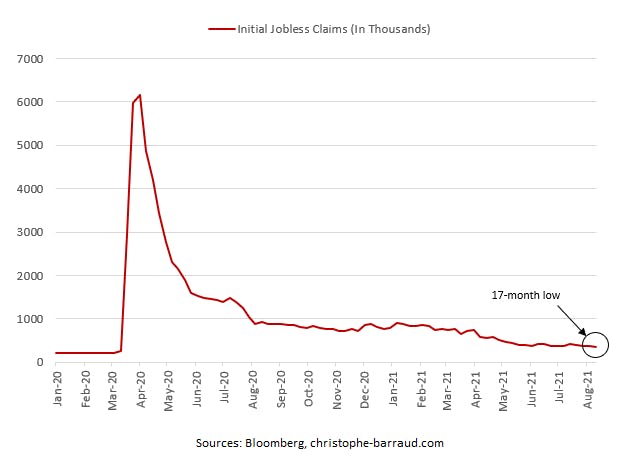
Employment market recovered over the past few months. The latest monthly report shows nonfarm payrolls increased 943k in July, following a revised-up gain of 938k in June. The economy lost 22.4 million jobs over the March-April period last year and has netted 16.7 million since then. In the meantime, data released yesterday showed the number of jobless initial claims dropped to the lowest since the pandemic began.

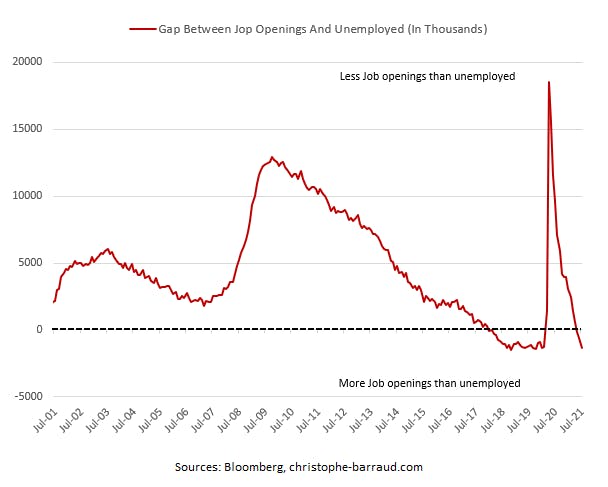
In addition, the labour market is probably much tighter than indicated by the 5.4% unemployment rate. As a matter of fact, the difference between number of job openings and unemployed is nearly 1.4M (taking into account the same number of job openings for July), roughly the same gap seen in September and October 2019, when unemployment rate averaged 3.55%.
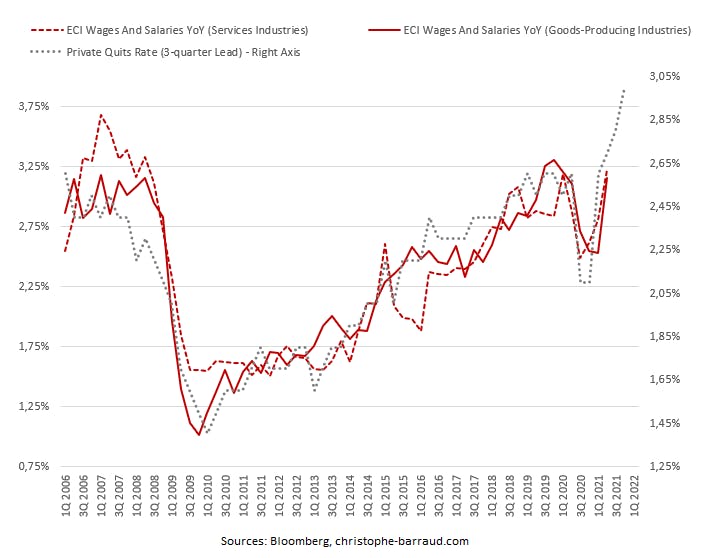
Meanwhile, companies find huge difficulties to find employees. According to the NFIB, nearly half of U.S. small business owners reported unfilled job openings in July, a record-high and more than double the historical average. At the same time, more workers are quitting (the quits rate was 2.7% in June which was second only to the record high of 2.8% in April), which suggests that wages growth is likely to accelerate in the coming months.
The current inflationary shock is less transitory than expected
Policymakers have been surprised by the strength and the length of the current inflationary shock. The CPI has accelerated more than expected and has increased by 5% YoY or more since May, while the core component has risen by more than 4% YoY since June. PCE price index has also jumbed by 4% since May while core PCE price index grew by 3.5% YoY in June (fastest pace since December 1991).
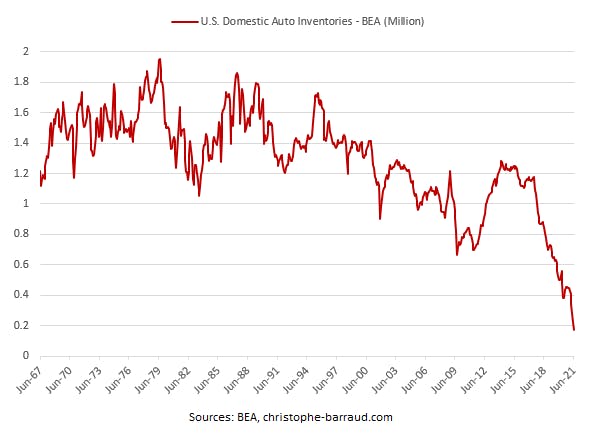
Although a part of this inflation is linked to reopening and will support the hospitality sector on a very short term basis, another part is likely to persist more than forecasted. Very quickly, the transitory shock of 2/3 months is turning into a shock of at least 9/12 months. In the details, price increases linked to the auto sector will persist longer than anticipated as chip shortage is still gaining traction.
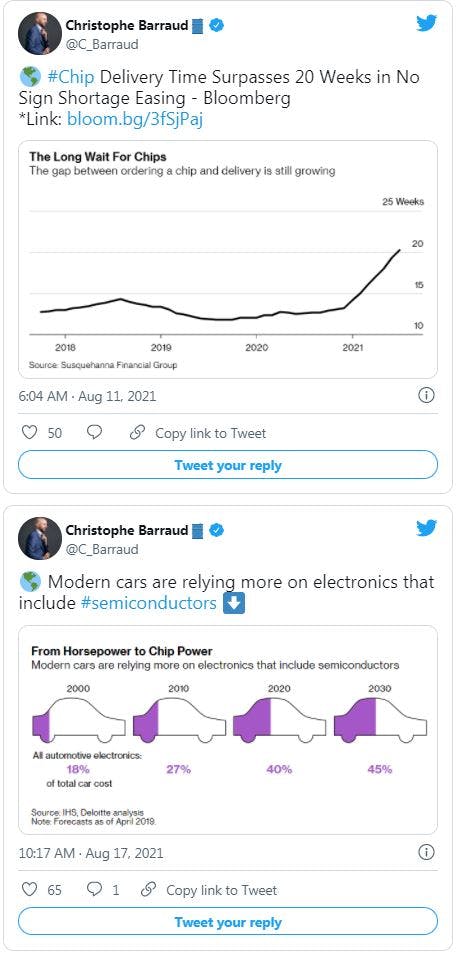
More automakers are forced to cut production, which will add further downside pressure on inventory and will keep supporting both new and used car prices.
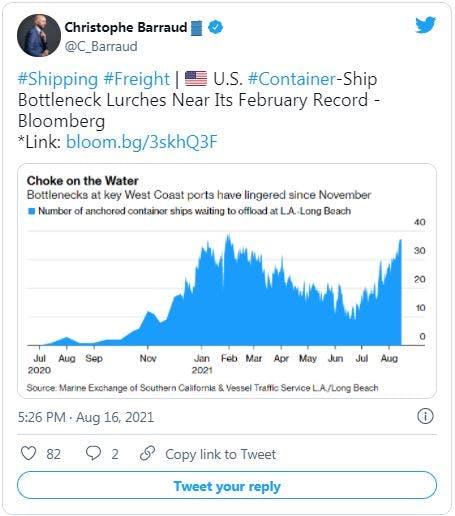
Meanwhile, a big bang has happened in the freight industry, with prices making a new record high every week. Recently, the port of Ningbo-Zhoushan in China was partially shut down, disrupting global trade at a time when businesses are ramping up for the Christmas holiday shopping season.
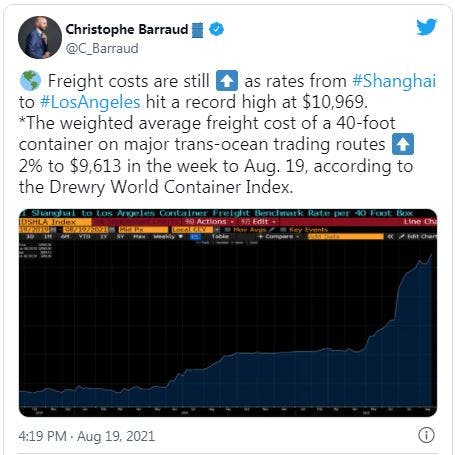
Latest developments come after typhoon activity impacted shipping at Yantian port, a move that has already reverberated worldwide.
Advertisement
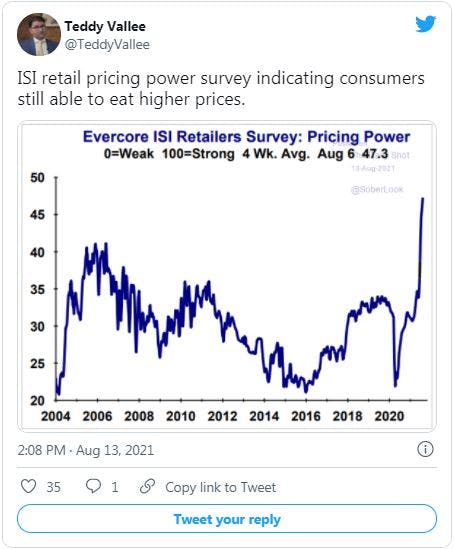
Discussing with a lot of CEOs, most of companies feel comfortable with the idea of passing costs on consumers from September. As a result, a part of inflation that was expected to normalize quickly is unlikely to do so before Christmas.
U.S. Rents Will Support Core Inflation In The Coming Months
Since a few months, one of the key developments in the U.S. housing market has been the rebound of rent prices. As I showed recently, all measures confirm that market rents are rising most on record. The main problem is that the current pace of increase is still gaining traction. The move is supported by four major factors namely the rebound of national mobility, the rent-versus-own arbitrage, increasing funds participation and the wage increases in certain lower-paid industries. At least one of them seems to be durable. The violent spike in housing prices for existing home sales (and also new home sales) has resulted in falling affordability and has squeezed a lot of first-time buyers out of the market. The latter are forced to rent rather than buy a home.
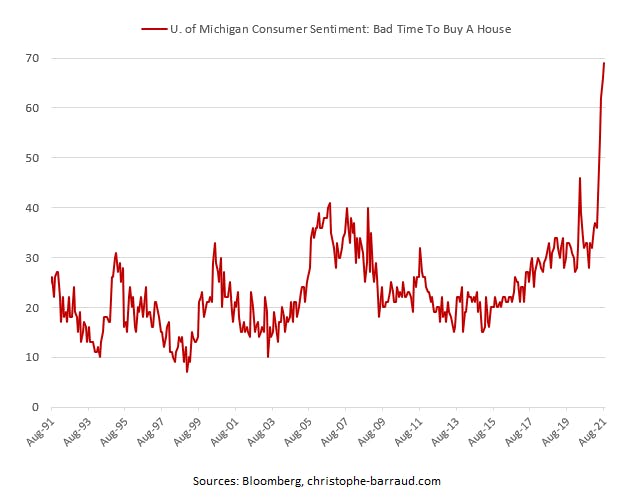
It will become soon a key problem for Fed policymakers in a context where the shelter component of the CPI (also the PCE Price Index) tend to lag market rents. This delay can be explained by data construction and suggests that the recent spike in market rents will impact Fed inflation measures in the coming months.
Conclusion
Fed policymakers have completely understated the pace of inflation and will be forced to revise upward their projections for both 2021 and 2022 during the September meeting. Durable inflation linked to rents is coming and that’s why I believe that the Fed will be forced to act by tapering at least MBS purchases before year-end. The dynamic of rents should be followed closely as it could have serious economic, social and political consequences.
More articles


About Trackinsight
Since our founding in 2016, we have been at the forefront of the industry, delivering accessible, comprehensive, and reliable tools to support the evolving needs of investors.
Over the past decade, Trackinsight has expanded its operations across six countries, serving thousands of professional investors. We’ve consistently innovated to provide cutting-edge solutions that meet the changing demands of the ETF market.
In 2024, Kepler Cheuvreux, a leading independent European financial services firm, acquired a majority stake in Trackinsight, becoming the company's principal shareholder.
This strategic partnership solidifies Trackinsight's position as a premier provider of ETF selection and analysis tools, while strengthening Kepler Cheuvreux’s commitment to becoming a leading player in the ETF sector.
Together, we are committed to offering advanced services that empower professional investors, advisors, institutions, and issuers. This new step enables us to deliver even more comprehensive and innovative technological solutions, driving ETF investing to new heights.
More about TrackinsightETF TOOLS
PLATFORM
ETF NEWS & RESEARCH
Privacy policy | Cookie policy | | Terms of use | Imprint