Get your free ETF data sample from our comprehensive offerings. Start your free trial→
Help us improve your experience. Please confirm your investor type:
The ETF Industry Is Evolving Fast
From AI infrastructure to active strategies, the ETF landscape is shifting. Share your perspective in the 7th Annual Global ETF Survey.

Shipping ETFs sail smoothly through wavy markets
Shipping ETFs came into investors' radar this year as speedy as vaccination campaigns in developed nations. Get deep insights on the shipping industry.


By Rony Abboud
September 22, 2021
- Global
Advertisement
Shipping ETFs came into investors' radar this year as consumer demand surges in developed countries while lockdowns at the world's largest exporter wreak havoc on global trade and shipping.
Shipping: An indispensable industry
The shipping industry is the backbone of globalization and international trade, transporting more than 80% of world trade volume and about 70% of trade value.
📊 Share your ETF outlook
From AI infrastructure to active strategies, the ETF landscape is shifting. Share your perspective in the 7th Annual Global ETF Survey and get exclusive early access to the final report.
More than 10 billion tons every year travel in 70,000 vessels and tankers to deliver the world's most consumed soft and hard commodities. Whether it's the latest Air Jordan's or fuel to our cars, this represents an impressive 1.5 tons per person based on the current global population.
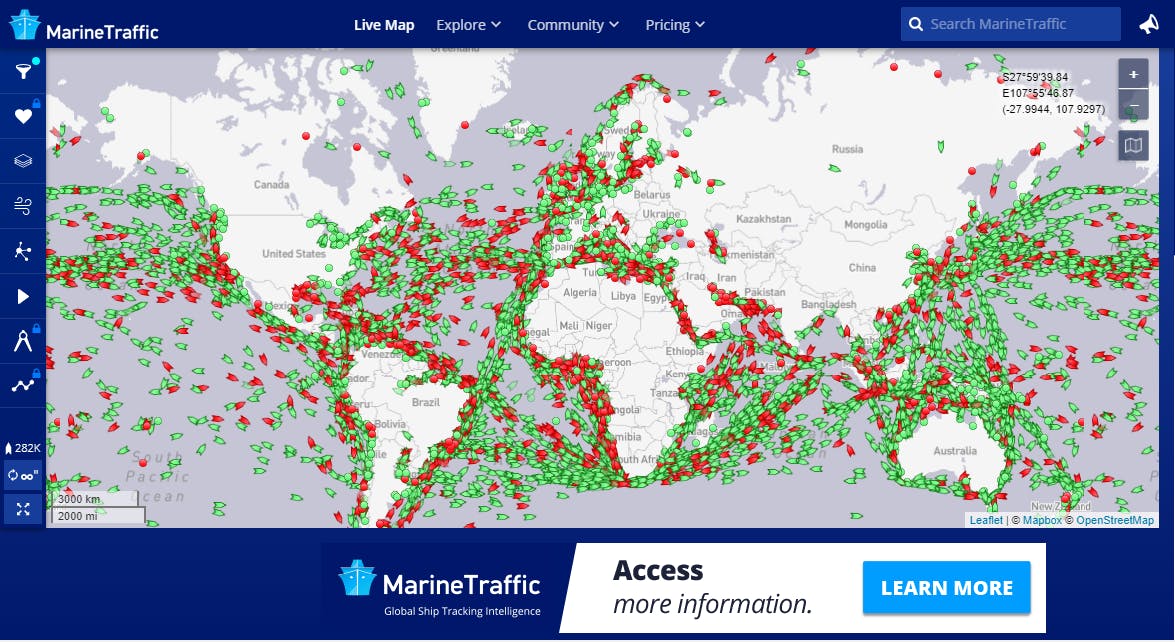
Why Shipping rates are so high?
As COVID-19 spread like wildfire across continents, maritime shipping saw a dramatic slowdown as government measures used to curb the pandemic restricted economic service activities and travel.
Early on, the pandemic had a huge hit on global demand but free stimulus checks and stay at home habits shortly became a reactive formula. The container shipping industry was suddenly overwhelmed by orders from developed nations especially from North America, where homes and income are larger on average.
People started investing on their homes with renovations, building home offices and gyms and even buying excessive recreational gears. This shifted their consumption patterns in a way that was never seen in past downturns. Demand for services which require physical presence such as recreation, hotels, food and beverage dropped while online orders for clothing, footwear, furniture and household equipment surged to above normal levels.
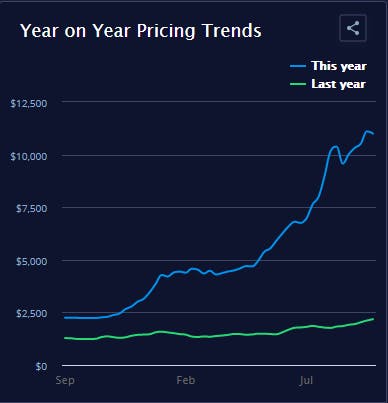
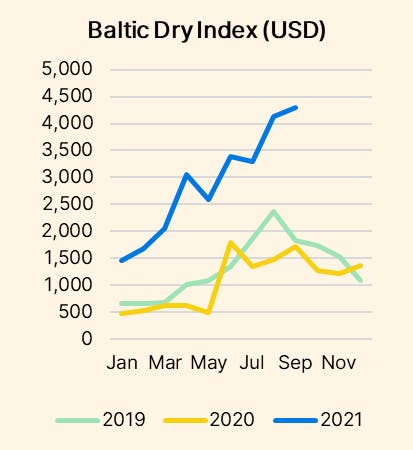
On the supply side, the shipping industry was not ready to meet demands. Rising cases of COVID-19 and strict health protocols in some ports disrupted the loading and unloading process and eventually caused a reduction in ports capacities and shipment delays.
The messy cycle caused a global port congestion, especially in North American ports in Los Angeles and Long Beach, where demand for imports is very high. Adding to it was the Evergreen ship incident in April 2021, when the freighter got stuck in Suez Canal creating a huge backlog that lasted for months. The congestion affected both container and dry bulk shipping rates, pushing them to all-time highs and 13-year highs respectively.
What has been done to solve the issue?
Container shipping lines are trying to add back capacity as quickly as they can, ordering containers (which are also in short supply) and trying to increase the turnaround of container boxes. In some cases, shipping lines refused to take export cargoes from the US and from Europe, which pay considerably less. They have also chartered any other ship they can get their hands on and set budgets for orders of new container ships to meet future demands.
As for the rising prices, the trend is expected to continue with Christmas Season around the corner. Excess households' savings will continue to drive demand for the short and medium terms but till then, bottlenecks and congestion will be the norm.
Advertisement
Investing in Shipping ETFs
The amazing run container and dry bulk shipping year-to-date had intrigued ETF investors and had them wondering about ways to access this booming industry.
Despite the size and impact of the shipping industry, few ETF providers came on board. Currently there are only two ETFs with pure shipping exposure.
Shipping ETF #1: Breakwave Dry Bulk Shipping ETF (BDRY)
BDRY has been the ETF story of the year, riding the boom in shipping demands and absurd surge in dry bulk shipping rates. Year-to-date, BDRY has posted more than +275% in returns and continue to attract millions of inflows since making post-covid headlines. It's the first and only ETF with pure-play exposure to dry bulk shipping, an instrumental part of the global commodity market. It invests in near-dated freight futures contracts on dry bulk indices. BDRY has an expense ratio of 3.32% and trades on the New York Stock Exchange.
Shipping ETF #2 : SonicShares Global Shipping ETF (BOAT)
Unlike its older peer, BOAT invests in global shipping companies that transport goods and raw materials, including consumer and industrial products, vehicles, dry bulk, crude oil and liquefied natural gas. It has 52 holdings, with third of the portfolio concentrated in the top 5 (Mistui O.S.K Lines 10.36%, Kawasaki Kisen Kai 9.78%, Hapag Lloyd AG 6.58%. Zim Integrated Shipping Services 5.71% and Matson Inc. 5.05%). The fund is still young, launched early August of this year on the New York Stock Exchange. It has an expense ratio of 0.68% and fared well in a short a time span with 20% gains since inception.
The ESG trend is now seaborn with Shipping ETFs
The shipping industry is responsible for a significant proportion of the global climate change problem. It is estimated that more than 3% of global carbon dioxide emissions can be attributed to shipping activities, not to mention all the waste and oil spilling incidents that damaged marine life.
As investors ESG appetite goes sky-high this year, ETF providers have been tailoring investment solutions where capital gains and impacting goals go hand in hand. On September 20th, 2021, the trend caught up with the shipping industry as provider ETFMG launched a ”Green” tech fund called the ETFMG Breakwave Sea Decarbonization Tech ETF or BSEA. The fund will invest in global companies providing innovation in technologies, equipment and services related to marine or ocean decarbonization.
Breakwave Advisors, the godfather of its sibling the Breakwave Dry Bulk Shipping ETF will help manage the underlying Marine Money Decarbonization index (MMDI).
As of inception, the top 5 (out of 51) holdings include Aker Horizons ASA (4.11%), Kongsberg Gruppen (4.05%), ITM Power (3.87%), Vestas Wind System (3.87%) and Siemens Energy AG (3.81%). BSEA will have an expense ratio of 0.75% and will trade on the New York Stock Exchange (NYSE).
Advertisement
Keep reading:
- U.S. rents spike will force policymakers to review their assesment of inflation
- Top ETFs of the week: Oil, Gas and Uranium
- Worst performing ETFs this week: China ETFs & Metals
Find and compare over 7,000 ETFs with our free tools:
More articles


About Trackinsight
Since our founding in 2016, we have been at the forefront of the industry, delivering accessible, comprehensive, and reliable tools to support the evolving needs of investors.
Over the past decade, Trackinsight has expanded its operations across six countries, serving thousands of professional investors. We’ve consistently innovated to provide cutting-edge solutions that meet the changing demands of the ETF market.
In 2024, Kepler Cheuvreux, a leading independent European financial services firm, acquired a majority stake in Trackinsight, becoming the company's principal shareholder.
This strategic partnership solidifies Trackinsight's position as a premier provider of ETF selection and analysis tools, while strengthening Kepler Cheuvreux’s commitment to becoming a leading player in the ETF sector.
Together, we are committed to offering advanced services that empower professional investors, advisors, institutions, and issuers. This new step enables us to deliver even more comprehensive and innovative technological solutions, driving ETF investing to new heights.
More about TrackinsightETF TOOLS
PLATFORM
ETF NEWS & RESEARCH
Privacy policy | Cookie policy | | Terms of use | Imprint