Get your free ETF data sample from our comprehensive offerings. Start your free trial→
Help us improve your experience. Please confirm your investor type:
The ETF Industry Is Evolving Fast
From AI infrastructure to active strategies, the ETF landscape is shifting. Share your perspective in the 7th Annual Global ETF Survey.
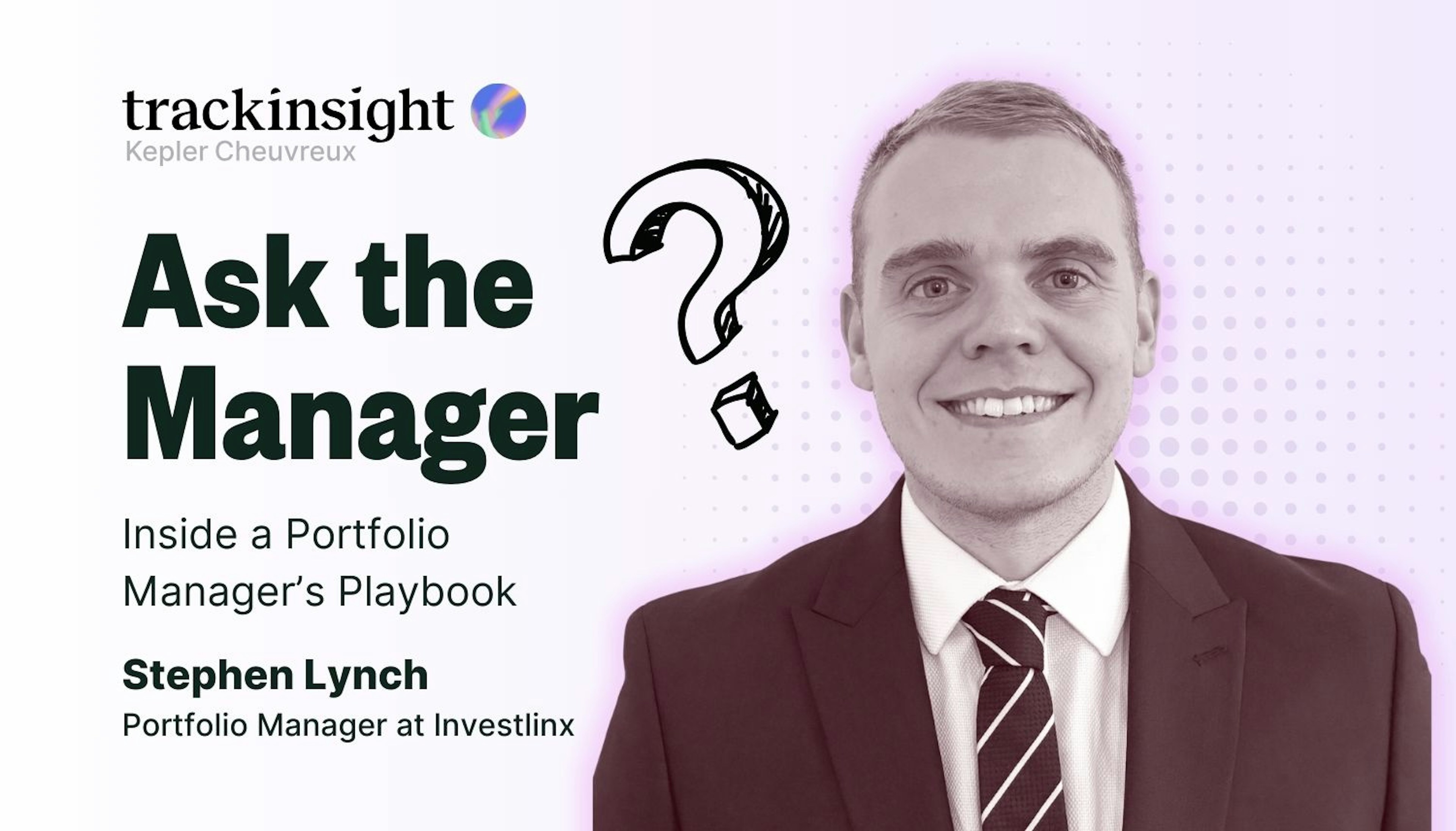
Ask the Manager: Inside a Portfolio Manager’s Playbook with Stephen Lynch
Long-term investing in a fast-moving world—how Portfolio Manager Stephen Lynch works to stay ahead.

By Trackinsight
March 3, 2025
- Investlinx
Advertisement
Stephen Lynch, Portfolio Manager at Investlinx, joins Ask the Manager to share how he spots global investment opportunities, navigates market shifts, and stays ahead of key trends like AI and automation. He also talks about his long-term approach, the toughest sell decisions, and the investors who’ve shaped his thinking. Let’s dive in!
What is your process for identifying new investment ideas globally?
Our investment philosophy focuses on identifying high-quality companies with a strong competitive advantage, exposure to sectoral growth trends, low leverage and a long-term holding period similar to private equity. As a result, our investment universe tends to be more selective and narrower compared to some of our competitors.
ETF Data Built for Precision
Trackinsight delivers reliable and comprehensive coverage on 14,000+ ETFs
We apply a thorough and structured approach that incorporates a range of factors to build our investment universe.
This includes top-down idea generation, bottom-up fundamental analysis, secular growth trends, and industry insights, while also allowing a degree of flexibility and creativity for portfolio managers to suggest companies that align with our philosophy.
Could you give an example of the types of structural growth themes or market trends you are particularly focused on right now?
We have many different themes across our portfolio which span from digital payments to advances in life sciences. One overarching theme which will continue to dominate over the next few years is AI. It will have a transformative impact on workflows across all industries.
The AI sector has garnered significant media attention in recent weeks, particularly following the rise of Deepseek, a Chinese AI firm disrupting the industry with its low-cost, open-source large language models. This development raises important questions regarding the necessity of advanced GPU chips and whether the substantial capital expenditures on AI infrastructure by US hyperscalers are truly warranted.
Despite the market’s cautious response to Deepseek's emergence, we remain highly optimistic about the long-term growth prospects of AI. As models like Deepseek's enter the market at more affordable price points, we believe they will serve as a catalyst for accelerating AI adoption and growth across a wide range of industries.
A key focus point during the current AI boom surrounds Jevons Paradox which refers to the idea that as technological improvements increase the efficiency of resource usage, the overall consumption of that resource may increase.
A good example of this is the coal trains in the 19th century. When steam engines were improved and became more efficient, they could carry more coal at once, leading to lower transportation costs. Instead of using less coal, the cheaper transport encouraged more coal to be used overall, as it became more profitable to mine and ship even more of it.
Another area that continues to generate significant excitement is the structural growth of robotics and automation, which is not only transforming industries today but will continue to revolutionize them in the future.
Advertisement
Taking the healthcare sector as an example, an increasing number of surgeries are being performed with the assistance of robotic technology. The total addressable market (TAM) for robotic surgery is currently estimated at 50 million procedures which is only 5% saturated. Intuitive Surgical, one of our portfolio holdings, is the manufacturer of the da Vinci Surgical System, the current gold standard for robotic-assisted soft tissue surgery.
Intuitive has successfully installed over 8,000 da Vinci systems in hospitals worldwide, including 5,000 in the United States and a growing number in emerging markets. It is truly remarkable to see how delicate procedures, once thought to require only human intervention, are increasingly being handled with the precision and capabilities of robotics.
What's your outlook for equities and bond market for 2025?
We pride ourselves on being long-term investors so it’s very hard to call the market over the next 12 months especially given the various variables at play; global tariffs, political uncertainty in Europe and the risk of a trade war to name a few.
However, I maintain a cautiously optimistic outlook for equity and credit markets in 2025, supported by continued economic growth, though at a more moderate pace than in recent years, and the ongoing normalization of monetary policy across most developed economies.
However, 2025 is poised to be another period of substantial volatility for financial markets. Many of the factors that shaped 2024—policy uncertainty in France, elections in Germany, budget discussions in the UK, the conflicts in Ukraine and Palestine, China's economic challenges, tensions over Taiwan and the first year of Trump’s second presidential term with a packed agenda of trade policies and international relations—are expected to significantly influence financial markets in 2025.
High valuations in US equities and global fixed income markets warrant caution. US equity markets are trading at close to their highest valuations in 20 years, fueled by widespread growth optimism.
While some of this is attributed to the strong earnings prospects of mega-cap technology companies, even excluding these, the market is near record valuations. Following a 14-month, 40% rally driven primarily by multiple expansion,
Similarly, credit markets are also highly valued, driven by strong demand for yield and favorable macroeconomic conditions. Both EUR High Yield and Investment Grade corporate bonds are trading at spreads to German Bunds that fall within the highest 25th percentile since 2008 and the highest 10th percentile since 2022.
Advertisement
Meanwhile, persistent inflationary pressures and rising fiscal deficits could slow the decline in interest rates, leaving little buffer against potential credit spread decompressions.
How do you balance patience with the potential need to sell if circumstances change?
This is often one of the most challenging decisions we face and a subject of vigorous debate, not only within our firm but across the entire investment management industry. As I mentioned earlier, our approach is that of long-term shareholders, with a private equity mindset applied to listed markets.
Our typical holding period spans six years, and since inception, our portfolio turnover has been less than 20%, significantly lower than most mutual funds.
This reflects our commitment to long-term investing; we do not react impulsively to initial signs of market weakness. We make the decision to sell only when there has been a fundamental shift in our investment thesis for a particular company.
This shift can manifest in various forms, such as a change in the management team, a shift in corporate strategy, or external factors impacting the company’s long-term growth prospects.
For illustration, I will use Diageo as an example, which we had owned due to the company's global leadership in the spirits industry and its strong market position across products and geographies.
Despite our awareness of the post-COVID 'hangover' affecting the spirit industry, characterized by inflated inventories at global wholesalers and retailers due to supply chain disruptions, we believed that Diageo's share price adequately factored in these challenges. Diageo unexpectedly faced a setback with the sudden passing of its long-time CEO, Ivan Menezes, in June 2023.
Menezes was credited with building the company to its current leadership position and shifting its focus toward premium brand spirits. Subsequently, the performance of the new leadership failed to inspire confidence.
The subsequent Capital Markets Day hosted by Diageo did little to ease our worries. The company presented a business plan with unimpressive operating profit growth targets and lacked crucial business and financial details, such as superficial explanations for elevated marketing budgets and the absence of benefits from declining raw material prices.
Given our limited visibility into Diageo's management's capability to execute its business plan, we opted to sell our Diageo shares in December 2023 and redirected our capital toward more promising investment opportunities.
What drew you to become a portfolio manager, and was it always your aspiration?
I’ve always been curious about how the world works, why certain businesses, like the ones I see around me, exist and what decisions their leaders make that help them succeed or fail. I find it interesting how human behavior affects these companies, from the confidence shown in their stock prices to the way they create business models to make money.
I’m also fascinated by how companies figure out what makes people want to buy and how much they’re willing to pay. Most of all, I’m drawn to how all these companies fit together to make the world work
Among the investing giants, who do you consider your idol or greatest influence?
The answer is undoubtedly Warren Buffett, whose investment philosophy makes perfect sense to me, especially given that much of it was inspired by Benjamin Graham, another figure I deeply admire. I greatly respect Buffett’s longevity and his unwavering commitment to his strategy and core beliefs, particularly in today’s environment where fast money and meme stocks dominate the news is to be truly admired.
His focus on investing in businesses he understands, maintaining a long-term perspective on quality firms with low leverage, and having the conviction to look beyond short-term market fluctuations in favor of long-term value are principles that align closely with the investment approach we uphold at Investlinx.
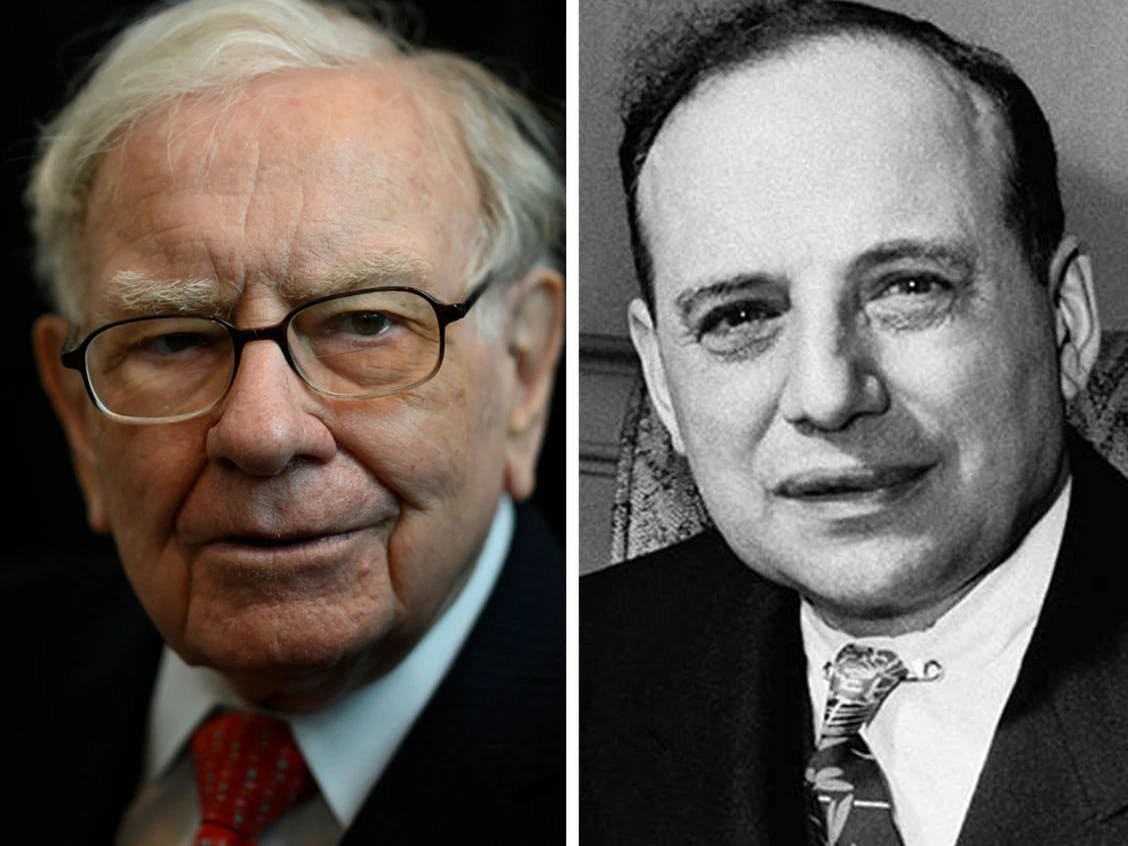
Two of the world's most famous investors, Warren Buffett and Benjamin Graham, right. Photo by Johannes Eisele/AFP via Getty Images/Investopedia.com
Which investing or finance book is your personal favorite, and why does it stand out to you?
Choosing just one book is difficult, but if I had to, it would undoubtedly be the timeless classic The Intelligent Investor by Benjamin Graham. It was the first investment book I ever received as a gift, and I believe it played a significant role in shaping my investment philosophy from an early age.
The key principles that resonated most with me include the importance of emotional discipline, the emphasis on fundamental analysis, and the concept of maintaining a margin of safety when making investment decisions—core themes that Graham explores throughout the book.
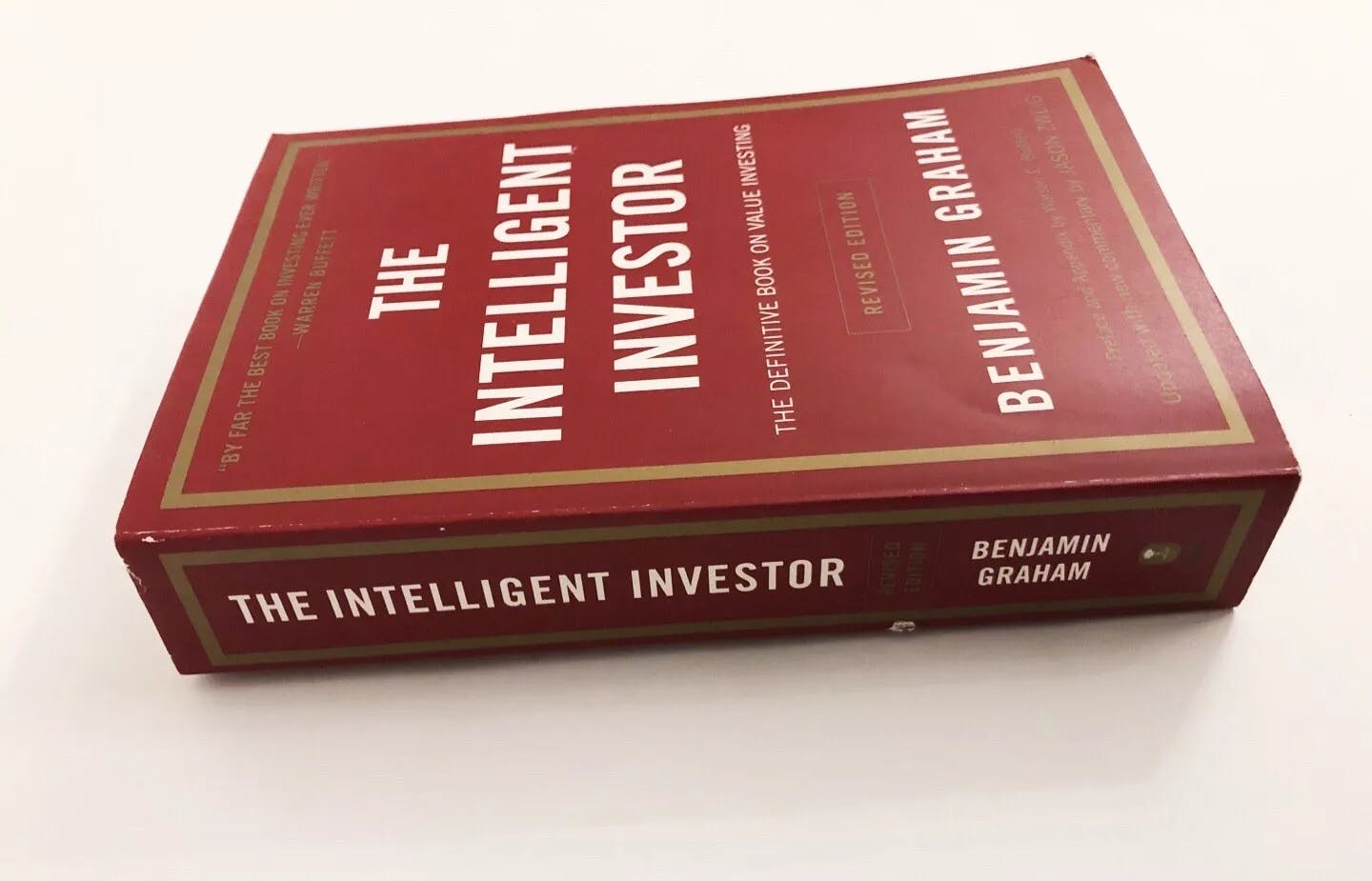
Photo retrieved from Ebay
About Stephen Lynch
Stephen is a portfolio manager overseeing Investlinx's active global equity ETF, the Capital Appreciation Fund, as well as their active multi-asset ETF, the Balanced Income Fund. Before joining Investlinx, he spent seven years in London, specializing in global and European equities.
Stephen began his career at Susquehanna International Group (SIG) as a trading analyst covering equity and derivative based products before moving to London to join Baader Bank, a German investment bank, where he focused on European markets across both research and sales. He later transitioned to the buy side as an equity analyst at Mako Trading, where he covered global equities and event-driven strategies. Stephen holds a Bachelor of Business Studies from Dublin City University in Ireland.
Please note this article is for information purposes only and does not in any way constitute investment advice. It is essential that you seek advice from a registered financial professional prior to making any investment decision.
More articles


About Trackinsight
Since our founding in 2016, we have been at the forefront of the industry, delivering accessible, comprehensive, and reliable tools to support the evolving needs of investors.
Over the past decade, Trackinsight has expanded its operations across six countries, serving thousands of professional investors. We’ve consistently innovated to provide cutting-edge solutions that meet the changing demands of the ETF market.
In 2024, Kepler Cheuvreux, a leading independent European financial services firm, acquired a majority stake in Trackinsight, becoming the company's principal shareholder.
This strategic partnership solidifies Trackinsight's position as a premier provider of ETF selection and analysis tools, while strengthening Kepler Cheuvreux’s commitment to becoming a leading player in the ETF sector.
Together, we are committed to offering advanced services that empower professional investors, advisors, institutions, and issuers. This new step enables us to deliver even more comprehensive and innovative technological solutions, driving ETF investing to new heights.
More about TrackinsightETF TOOLS
PLATFORM
ETF NEWS & RESEARCH
Privacy policy | Cookie policy | | Terms of use | Imprint