Trackinsight Enterprise, a unified platform for institutional ETF research, analytics, and compliance, is now live. Explore Trackinsight Enterprise →
Help us improve your experience. Please confirm your investor type:
The Ultimate ETF Comparison Tool - Try Now!
Analyze up to 5 ETFs side-by-side and gain instant insights on performance, fees, holdings, and more to make data-driven investment decisions.
What are Blockchain Games?
The gaming sector is expanding its network of users globally and blockchain gaming is becoming a recognized industry. So, what exactly is blockchain gaming?

By Rony Abboud
November 1, 2021
- Technology
Advertisement
Blockchain gaming has popped in the last couple years, bolstered by the crypto craze and the stuck-at-home pandemic effects. According to the latest BGA Blockchain Game Report from analytics site DappRadar, a wave of 804,000 unique active players connected to blockchain-based games in July 2021. The uprise shows that the gaming sector is expanding its network of users globally and blockchain gaming is becoming a recognized industry. So, what's Blockchain gaming?
To understand Blockchain games, one must understand blockchain technology, the one that powers Bitcoin and other cryptocurrencies. This technology is at the heart of blockchain gaming.
📊 Share your ETF outlook
From AI infrastructure to active strategies, the ETF landscape is shifting. Share your perspective in the 7th Annual Global ETF Survey and get exclusive early access to the final report.
What is Blockchain?
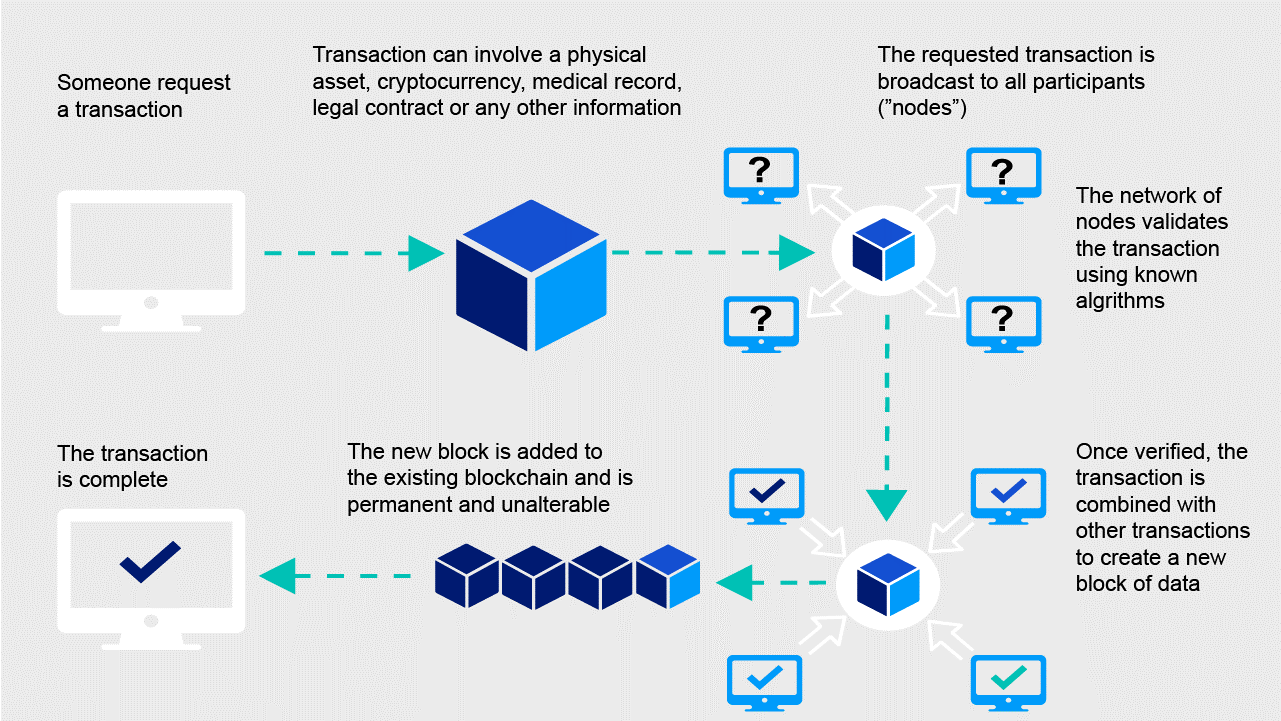
According to investment management company Invesco, a ‘blockchain’ is simply a ledger, or a complete record. The technology allows electronic recordkeeping of the transfer of currency, information, or assets, between multiple participants. This collection of records represents an unalterable, single version of truth, removing the need for a central authority for reconciliation.
Blockchain for Dummies version
The non-technical and simplest way to explain is coined by Tim Kulp, director of emerging technology at Mind Over Machines. He came up with the "school lunch" explanation which any K12 student can understand, and it goes like:
“Imagine a school lunch table with a bunch of kids sitting at it. Two kids want to trade lunches. Kid A says: ‘I’ll trade you lunch if you have a cookie’ to Kid B. Kid B states that he does have a cookie and the two-trade lunch. As the kids trade lunches, the Principal comes over and asks: ‘What’s going on here?’ At which point all the kids at the table speak up and say Kid A traded lunch with Kid B.
In this story, Kid A and B are ‘participants,’ also known as actors, in the blockchain. Lunch is the asset. The lunch trade is the transaction. Whether Kid A’s lunch contains a cookie is a smart contract. Finally, the Principal’s review is the validation of the transaction.
How do Blockchain Games work?
Now that we've spoon-fed you the blockchain explanation, it's time to talk about how Blockchain games work. As most people know, gaming is a centralized activity with everything developed from game skins, in-game currency, and assets confined to the game itself. As a result, game developers retain ownership of everything, and nobody can create an alternative version of the game, unless authorized.
In a blockchain game however, most of the core logic and data are governed by smart contracts (programs stored on a blockchain, that run when predetermined conditions are met), and that can be analyzed and reused. And because all blockchain transactions are immutable, the ownership of assets is unquestionable and there's no risk of duplicating assets. An asset earned in a blockchain game is securely transferred to the user's digital wallet via the smart contract, so you know they own it outright.
Players or users can choose to trade or sell their assets (e.g., a cool sword used in the game). It also has intrinsic value outside of the game and will exist similarly to cryptos in user's wallet even if the game itself shuts down. In some cases, assets could even be used in other games, as blockchain games have the potential to interact with each other.
Finally, many blockchain games’ assets are non-fungible tokens, or NFT’s. This means some tokens are guaranteed to be rarer and more valuable than others, creating an active marketplace. These NFTs can be sold for hundreds, thousands or even millions of dollars.
Advertisement
How to play Blockchain Games
There are loads of blockchain and crypto/NFT games available from collectables or role-playing to casinos. If you're interested in playing, check out the DappRadar's large list of available blockchain games. In most cases, players need a blockchain wallet, which is digital wallet that allows users to store and manage their Bitcoin, Ether, and other cryptocurrencies.
How you can invest in Blockchain Gaming
There's no pure-play publicly listed blockchain gaming companies since most of them are still private start-ups. However, there are many blockchain companies to invest in, mostly involved in digital asset mining, blockchain & digital asset transactions, blockchain applications, blockchain & digital asset hardware, and blockchain & digital asset integration.
The best way to get a diversified exposure is through exchange-traded-funds (ETFs).
There are multiple blockchain related ETFs in the market investors can look at:
- Invesco Elwood Global Blockchain UCITS ETF (BCHN)
- Global X Blockchain ETF (BKCH)
- Harvest Blockchain Technologies ETF (HBLK)
- Invesco Alerian Galaxy Blockchain Users and Decentralized Commerce ETF
- Amplify Transformational Data Sharing ETF
- Invesco Alerian Galaxy Crypto Economy ETF
- First Trust Indxx Innovative Transaction and Process ETF
- Capital Link NextGen Protocol ETF (KOIN)
- ETFS Fintech & Blockchain ETF
- Siren Nasdaq NexGen Economy ETF (BLCN)
Keep reading:
- Good week for bulls
- Cybersecurity ETFs are on this week’s top ESG ETF list
- Best performing ETFs: Chinese Tech and Private Equity
Find and compare over 7,000 ETFs with our free tools:
Interested in top ETF lists? Check out our Investing Guides:
- Investing in Gold ETFs
- Investing in Silver ETFs
- Investing in Commodity ETFs
- Investing in Oil ETFs
- Investing in ESG ETFs
More articles


About Trackinsight
Since our founding in 2016, we have been at the forefront of the industry, delivering accessible, comprehensive, and reliable tools to support the evolving needs of investors.
Over the past decade, Trackinsight has expanded its operations across six countries, serving thousands of professional investors. We’ve consistently innovated to provide cutting-edge solutions that meet the changing demands of the ETF market.
In 2024, Kepler Cheuvreux, a leading independent European financial services firm, acquired a majority stake in Trackinsight, becoming the company's principal shareholder.
This strategic partnership solidifies Trackinsight's position as a premier provider of ETF selection and analysis tools, while strengthening Kepler Cheuvreux’s commitment to becoming a leading player in the ETF sector.
Together, we are committed to offering advanced services that empower professional investors, advisors, institutions, and issuers. This new step enables us to deliver even more comprehensive and innovative technological solutions, driving ETF investing to new heights.
More about TrackinsightETF TOOLS
PLATFORM
ETF NEWS & RESEARCH
Privacy policy | Cookie policy | | Terms of use | Imprint