Global ETF Survey 2026: Answer now →
Help us improve your experience. Please confirm your investor type:
The ETF Industry Is Evolving Fast
From AI infrastructure to active strategies, the ETF landscape is shifting. Share your perspective in the 7th Annual Global ETF Survey.
ETFs in play after COP26 Summit
What do you need to know as an investor post COP26 summit? Using Trackinsight data, we highlight ETFs that investors could add to their idea bank.


By Rony Abboud
November 7, 2021
Advertisement
COP26 is the 26th annual UN climate change conference. The COP stands for "Conference of the Parties" and will be bringing together countries that have signed the United Nations Framework Convention on Climate Change (UNFCCC), a treaty that became effective in 1994. The conference is held in Glasgow from 1-12 November 2021, with more than 35,000 attending alongside world leaders, including negotiators, government representatives, businesses and citizens.
COP26 Goals
This year's agenda will focus on four global goals, reiterating what has been previously agreed upon in past summits, most notably the 2015 Paris Climate Agreement, including:
📊 Share your ETF outlook
From AI infrastructure to active strategies, the ETF landscape is shifting. Share your perspective in the 7th Annual Global ETF Survey and get exclusive early access to the final report.
1. Secure global net zero by mid-century and keep 1.5 degrees within reach
Countries are being asked to come forward with ambitious 2030 emissions reductions targets that align with reaching net zero by the middle of the century.
To deliver on these stretching targets, nations should focus on:
- Phasing out coal consumption
- Halting deforestation
- Increasing the adoption of electric vehicles
- Adding more renewables into the energy mix
2. Adapt to protect communities and natural habitats
Climate change isn't just about the temperature getting a bit warmer. In fact, the weather has drastically shifted in many regions on the planet and caused unprecedented natural disasters.
COP26 recognizes the need for nations work together to enable and encourage countries affected by climate change to:
- Preserve and restore ecosystems
- Deploy warning systems, improve defenses, infrastructure, and agriculture to prevent costly disasters
3. Mobilize finance
The first two goals require substantial amounts of money to tick them off the list. Therefore, developed nations should follow through on their promises to provide up $100 billion in Climate finance per year. In parallel, private financial institutions with huge access to capital should contribute by easing access to trillions in private and public sector finance to attain the net zero goals.
Advertisement
4. Work together to deliver
Synergy is mandatory to be able to pull off such ambitious goals on a global scale. The COP26 will emphasize on finalizing the Paris Rulebook and accelerate action to tackle the climate crisis through collaboration between governments, businesses, and civil society.
What you need to know as an investor
The four goals will be dissected and tackled in depth as world leaders move down in the COP26 12-day agenda. And when the summit is our rearview mirror, there will be certain drastic changes in the future that will impact various sector and industries.
Using Trackinsight data, we highlight ETFs that investors could add to their idea bank:
1. Clean Energy ETFs
If they count how many times certain words or sentences were said in COP26, "Clean Energy" would reign at the top. The clean energy industry is considered as a gateway to reach "Utopian" goals of a healthy planet and floods of funds will be poured into wind, solar and other renewable projects.
Global energy investments currently stand at around $2 trillion per year or 2.5% of global GDP, according to the International Energy Agency (IEA). The agency estimates that this figure will have to rise to $5 trillion or 4.5% of GDP by 2030 and stay there until at least 2050 to reach net zero CO2 emissions by mid-century. Much of this will be spent on electricity generation and infrastructure to electrify new economic sectors and to make the electricity system more suitable for much higher volumes and variability of renewable energy.
Investors willing to reap the benefits of the green revolution have 22 ETF options to choose from but should also realize that these investments are deemed long-term and may be volatile along the way.
Top 5 largest Broad Clean Energy ETFs:
- iShares Global Clean Energy ETF (ICLN)
- iShares Global Clean Energy UCITS ETF (INRG)
- Invesco WilderHill Clean Energy ETF (PWYF)
- ALPS Clean Energy ETF (ACES)
- Invesco Global Clean Energy ETF
Solar ETFs
- Invesco Solar ETF (TAN)
- HANetf Solar Energy UCITS ETF (TANP)
- Invesco Solar Energy UCITS ETF (SOLR)
- Global X Solar ETF (RAYS)
Wind ETFs
These ETFs have combined assets under management of $22.5 billion and managed to attract more than $7.3 billion in flows in 2021 ($8.87 billion in 2020). With COP26 underway amid a lingering energy crisis, clean energy ETFs rebounded in October after a tough year overall and managed to recoup some of the losses with double digit gains (on average).
Advertisement
2. Hydrogen ETFs
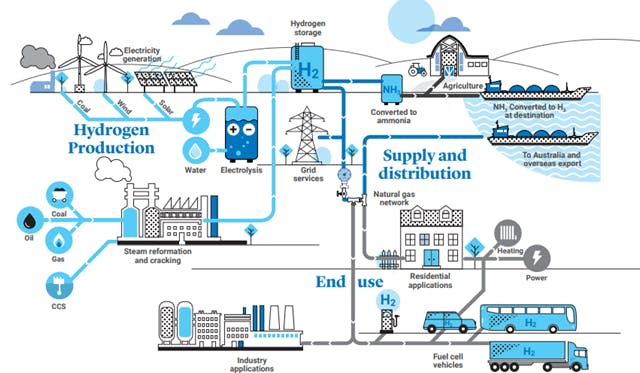
Hydrogen is the most abundant element, making up 90% of all the atoms in the known universe. It is a clean fuel, releasing water and heat when burned, and only water when consumed in a fuel cell. Light gas can be produced from a variety of domestic resources and can be used as a fuel option for electricity generation and transportation applications. The prospects of using Hydrogen as the fuel of the future created what we call today, the Hydrogen Economy.
Hydrogen is consumed in various industries including oil refining, chemical production, iron and steel production, vehicles, aviation and maritime. According to research firm Frost & Sullivan, global dedicated hydrogen production is estimated to rise from its current 71 million tonnes to 168 million by 2030. Revenue generation within the market is expected to increase from $177.3 billion in 2020 to $420 billion in 2030.
Hydrogen, when produced via clean energy sources can be used as an energy carrier or fuel for fuel cell vehicles and be stored for different applications. COP26 talks could boost the adoption of hydrogen, putting the following 6 ETFs in the spotlight:
- L&G Hydrogen Economy UCITS ETF (HTWO)
- VanEck Vectors Hydrogen Economy UCITS ETF
- The Defiance Next Gen Hydrogen ETF
- ETFS Hydrogen ETF
- Global X Hydrogen ETF
- Horizons Global Hydrogen Index ETF
The funds were all launched in 2021 and have managed to attract more than $750 billion in flows. They invest in companies within the hydrogen economy, involved in energy input, production, transport, storage and end-use.
3. Uranium ETFs
Despite the dilemma and mixed feelings surrounding nuclear energy, most experts agree that the output of nuclear power reactors are clean and environmentally friendly. The main issues are the potential disasters, hazards and nuclear waste related to its operations. There is a divergence of international opinion on whether to increase nuclear energy in the energy mix (e.g. China, Japan, France) or phase them out (e.g. Germany).
According to the World Nuclear Association, there are about 445 nuclear power reactors operating in 32 countries plus Taiwan, with a combined capacity of about 400 GWe. In 2020, these provided about 10% of the world's electricity. About 50 power reactors are currently being constructed in 19 countries, notably China, India, Russia and the United Arab Emirates.
In addition to these projects, there are currently around 100 power reactors on order or planned, and over 300 more are proposed. Most reactors currently planned are in Asia, with fast-growing economies and rapidly rising electricity demand.
With nuclear energy in COP26's agenda, the Nuclear Energy association and the International Atomic Energy Agency are expected to showcase the important and growing role of nuclear energy in a worldwide net-zero scenario.
To join the bandwagon on the investment side, 4 Uranium/Nuclear ETF are available. Like clean energy, they were one of top performing funds in October, driven by the energy crisis and the physical Uranium buying spree initiated by Sprott Uranium Trust. They have combined assets under management of $2.26 billion and have attracted more than $1.43 billion in flows this year.
- Global X Uranium ETF (URA)
- North Shore Global Uranium Mining ETF (URNM)
- Horizons Global Uranium Index ETF (HURA)
- VanEck Vectors Uranium+Nuclear Energy ETF (NLR)
4. Electric Vehicle (EV ETFs), Battery/Lithium ETFs
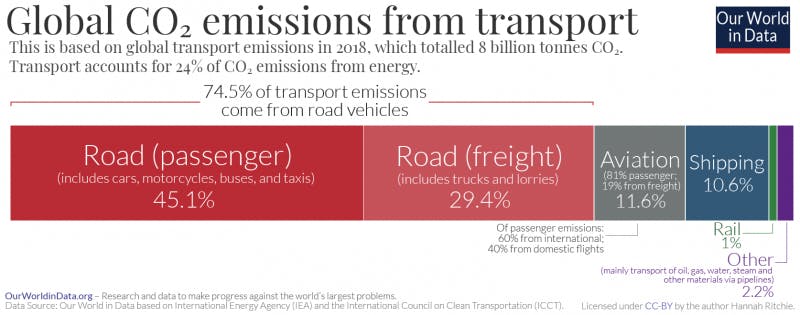
According to the IEA (International Energy Agency), transport accounts for around 20% of global emissions. Road travel accounts for 75% these emissions or 15% of the total CO2 output. Most of this comes from passenger vehicles like cars and buses, which contribute 45.1%. The other 29.4% comes from trucks carrying freight.
To reduce CO2 emissions, governments should increase adoption and deployment of electric vehicle (EV) as highlighted by the proposed actions of goal #1 of COP26. The world has already made progress with the global electric car stock reaching the 10 million mark in 2020, a 43% increase over 2019, and representing a 1% stock share.
Current policies in different parts of the world suggest a healthy growth over this decade: in the conservative scenario (Stated Policies Scenario), the EV stock across all modes (except two/three-wheelers) would reach 145 million in 2030, or 7% of the total road vehicle fleet. EV markets could be significantly larger if governments accelerate efforts to reach climate goals. In the optimistic scenario (Sustainable Development Scenario), the global EV fleet reaches 230 million vehicles in 2030 (excluding two/three-wheelers), a stock share of 12%.
With so much potential ahead, investors have plenty to look at in the EV, Battery and Lithium ETFs department, such as:
- Global X Autonomous & Electric Vehicles ETF (DRIV)
- iShares Electric Vehicles and Driving Technology UCITS ETF (ECAR)
- Cathay Global Autonomous and Electric Vehicles ETF
- KraneShares Electric Vehicles & Future Mobility ETF (KARS)
- Fidelity Electric Vehicles and Future Transportation ETF
- Global X China Electric Vehicle and Battery ETF
- NH-Amundi HANARO Electric&Hydrogen Vehicle ETF
- iShares Self-Driving EV and Tech ETF (IDRV)
- ETFS Battery Tech & Lithium ETF (ACDC)
- Amplify Lithium & Battery Technology ETF
- Global X Lithium & Battery ETF (LIT)
- Horizons Global Lithium Producers Index ETF (HLIT)
Other Options
Infrastructure ETFs: Massive investments in structural, energy and digital infrastructure are required to support the clean energy, hydrogen, nuclear and EV revolution. Trackinsight data reveals 60 Infrastructure ETFs that might benefit in this transitional decade.
Carbon Allowance ETFs: Carbon markets already exist within some countries and regions. In some, like the “cap-and-trade” systems used by the E.U. and California, the government puts a cap on the amount of greenhouse gases that can be emitted by a given industry or sector of the economy. Businesses are then given an allowance of how many metric tons of CO2 they can emit. Those who emit less than their allotment can sell the extra to other businesses, pushing everyone to cut down emissions faster. With Carbon allowance becoming more expensive, investors can access this growing market via Carbon ETFs like the KraneShares Global Carbon ETF (KRBN), KraneShares European Carbon Allowance ETF, Kraneshares California Carbon Allowance ETF or Wisdom Carbon (CARP).
ESG ETFs: COP26 highlights the "E" in ESG (Environmental, Social and Governance), a theme that is making market headlines, with more than $134 billion in flows into ESG ETFs in 2021 ($90 billion in 2020). The number of investors who jumping on board the ESG investing bandwagon is growing rapidly as more come to realize the risks of separating such issues from business fundamentals. There are over 1,000 ESG ETFs with different strategies. For more details, refer to Trackinsight's ESG observatory.
Keep reading:
- Metaverse ETF: invest in the internet killer
- The Hydrogen Economy: Creating the fuel of the future
- Top ESG ETFs of October 2021
- Best ETFs of October 2021
INTERESTED IN SEEING LISTS OF TOP-PERFORMING ETFS? CHECK OUT OUR NEW INVESTING GUIDES:
- Investing in Gold ETFs
- Investing in Silver ETFs
- Investing in Commodity ETFs
- Investing in Oil ETFs
- Investing in ESG ETFs
FIND AND COMPARE OVER 7,000 ETFS WITH OUR FREE TOOLS:
More articles


About Trackinsight
Since our founding in 2016, we have been at the forefront of the industry, delivering accessible, comprehensive, and reliable tools to support the evolving needs of investors.
Over the past decade, Trackinsight has expanded its operations across six countries, serving thousands of professional investors. We’ve consistently innovated to provide cutting-edge solutions that meet the changing demands of the ETF market.
In 2024, Kepler Cheuvreux, a leading independent European financial services firm, acquired a majority stake in Trackinsight, becoming the company's principal shareholder.
This strategic partnership solidifies Trackinsight's position as a premier provider of ETF selection and analysis tools, while strengthening Kepler Cheuvreux’s commitment to becoming a leading player in the ETF sector.
Together, we are committed to offering advanced services that empower professional investors, advisors, institutions, and issuers. This new step enables us to deliver even more comprehensive and innovative technological solutions, driving ETF investing to new heights.
More about TrackinsightETF TOOLS
PLATFORM
ETF NEWS & RESEARCH
Privacy policy | Cookie policy | | Terms of use | Imprint