All you need to get started with ETF selection and analysis. Create your account now →
Help us improve your experience. Please confirm your investor type:
Don’t Miss a Move in the ETF Market
Sign up and keep track of everything that moved the ETF industry this week. From new launches to regulatory shifts across the Atlantic.


Renewable Energy Stocks Hit Hard by Higher Interest Rates
ETF data story for the week of October 2 to 6, 2023.

By Trackinsight
October 10, 2023
- Stock Market
- Energy
Advertisement
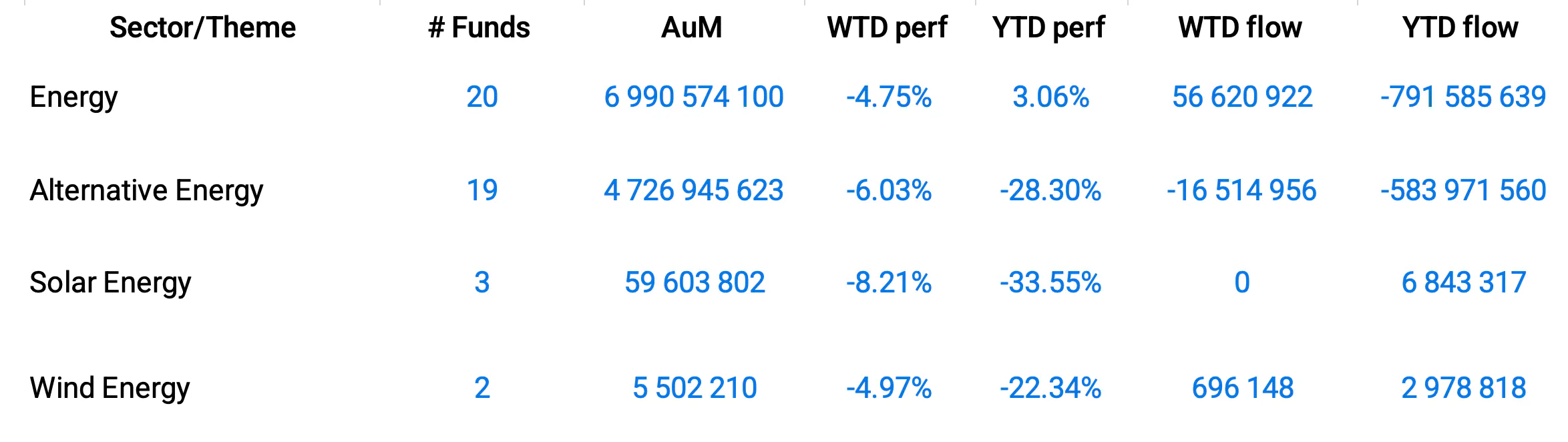
This year is proving a challenging landscape for players in the clean-energy sector. While the general energy sector, largely driven by fossil fuels, saw a modest rise of 3.06%, renewable or alternative energy exchange-traded funds have experienced a substantial downturn, depreciating by 28.30% so far this year.
Last week was particularly harsh for clean-energy ETFs, which plunged 6.03%. However, it wasn’t just renewable energy affected; fossil fuel-based equities also suffered a sizeable blow, with crude oil prices plummeting nearly 9%.
ETF Data Built for Precision
Trackinsight delivers reliable and comprehensive coverage on 14,000+ ETFs
Analysts attribute a large portion of this downward trend to rising interest rates, which negatively affect clean-energy companies operating on long-term contracts at preset prices - established before project development commences. Clean-energy companies primarily propel their operations using leverage and borrowing, both of which become significantly costlier as interest rates rise.
These alternative energy entities heavily rely on financial debt or leverage to seize growth opportunities presented by environmentally beneficial policies such as Net Zero 2050. However, with escalating inflation and stagnant pre-agreed pricing frameworks, profitability is under immense strain.
The trajectory of interest rates continues upward, and many clean-energy companies have been stung by the surge in borrowing costs. Some firms have even reported a hike of up to 40%. This heightened borrowing expense, subject to fluctuating interest rates, adds to the liabilities column, thereby eating into potential profits and deterring investors.
As a result, returns from clean energy ETFs have been significantly waning – a direct residual effect of increasing inflation against locked-in prices that had been agreed upon prior to the onset of inflationary pressures.
It appears that sustainable investments and ETFs are feeling the heat within this dynamic economic climate, where interest rate adjustments can drastically sway capital costs and overall profitability. As we navigate through uncharted financial territory, the resilience of these alternative energy investments will indeed be put to the ultimate test.
Group Data: Energy, Alternative Energy, Solar Energy, Wind Energy
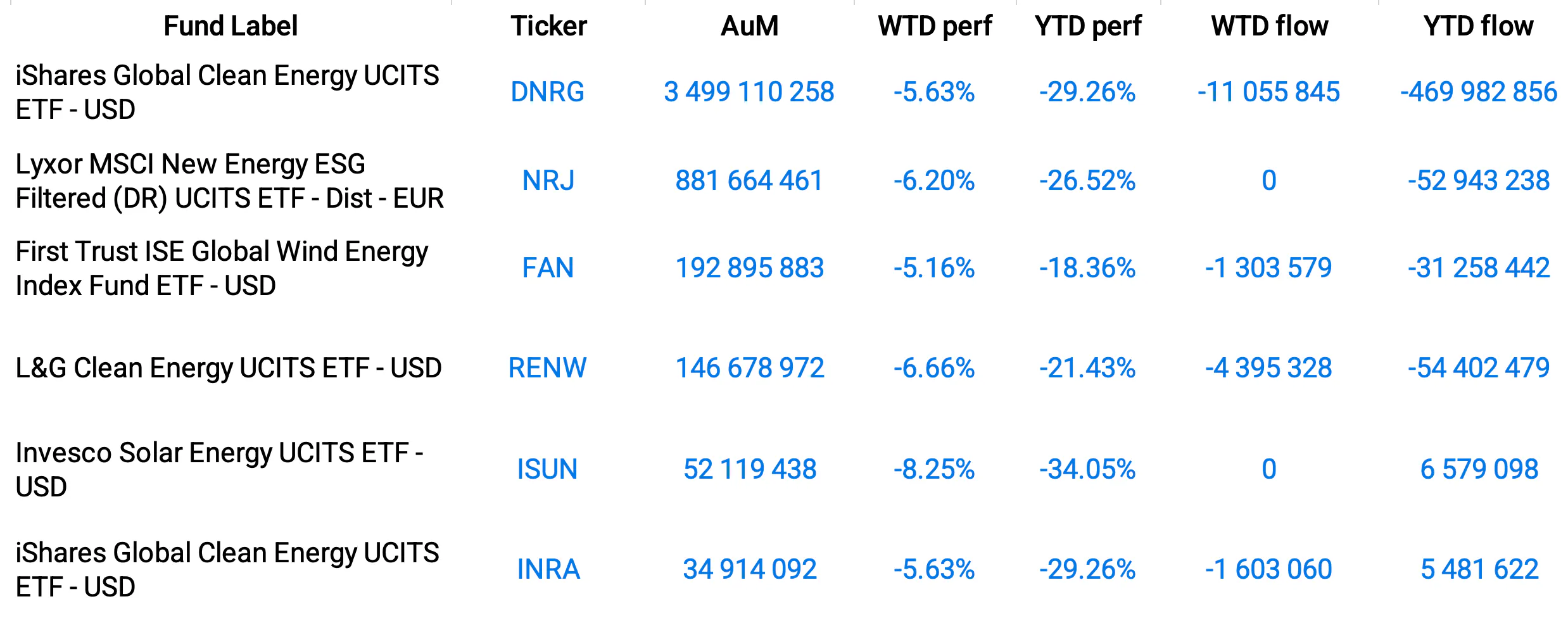
Funds Specific Data: DNRG, NRJ, RENW, ISUN, INRA
More articles


About Trackinsight
Since our founding in 2016, we have been at the forefront of the industry, delivering accessible, comprehensive, and reliable tools to support the evolving needs of investors.
Over the past decade, Trackinsight has expanded its operations across six countries, serving thousands of professional investors. We’ve consistently innovated to provide cutting-edge solutions that meet the changing demands of the ETF market.
In 2024, Kepler Cheuvreux, a leading independent European financial services firm, acquired a majority stake in Trackinsight, becoming the company's principal shareholder.
This strategic partnership solidifies Trackinsight's position as a premier provider of ETF selection and analysis tools, while strengthening Kepler Cheuvreux’s commitment to becoming a leading player in the ETF sector.
Together, we are committed to offering advanced services that empower professional investors, advisors, institutions, and issuers. This new step enables us to deliver even more comprehensive and innovative technological solutions, driving ETF investing to new heights.
More about TrackinsightETF TOOLS
PLATFORM
ETF NEWS & RESEARCH
Privacy policy | Cookie policy | | Terms of use | Imprint