Global ETF Survey 2026: Answer now →
Help us improve your experience. Please confirm your investor type:
Don’t Miss a Move in the ETF Market
Sign up and keep track of everything that moved the ETF industry this week. From new launches to regulatory shifts across the Atlantic.

Nvidia's Q4 Performance: Strong Company Growth and Stock Valuation Risk


By Leverage Shares
February 23, 2024
- NVIDIA
- Leverage Shares
Advertisement
As Nvidia (NVDA) executives bask in the glow of this season's stellar earnings, quite a few professional investors are taking a step back to reassess. Their caution stems from a growing gap they've noticed between what Nvidia hopes for the future and how its stock is doing right now.
The Bright Side: Strong Earnings and a Shift in Consumer Mix
To develop a comprehensive understanding, we undertake a "first-order" analysis, focusing on year-on-year changes in critical financial metrics. This is then supplemented by a "second-order" analysis, designed to identify sustained growth patterns. The insights gleaned from these analyses are particularly intriguing.
ETF Data Built for Precision
Trackinsight delivers reliable and comprehensive coverage on 14,000+ ETFs
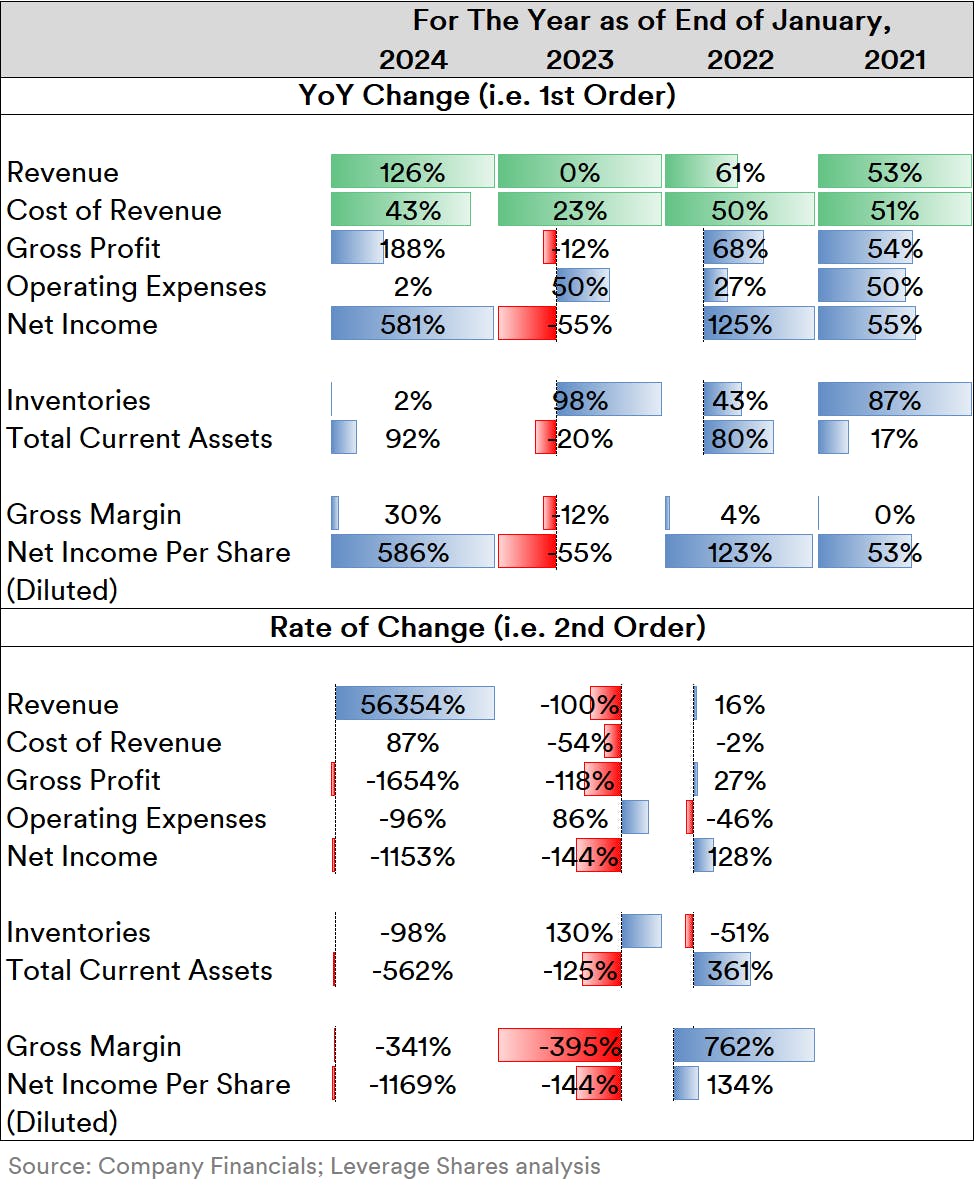
Following the 2022 Fiscal Year, there's been a dramatic shift away from largely-orderly shifts in trends. In the current fiscal year:
- Revenue growth has tripled the cost of revenue, while operational costs have seen a minimal increase of 2%.
- Both Gross Profit and Net Income have rebounded from last year's downturns, showcasing substantial outperformance that far exceeds revenue trends, with Gross Margin improving by 30% from the previous year to 73.8%.
- Inventory levels rose by a mere 2%, but a significant increase in Accounts Receivable has driven current assets to their highest in five years.
- Net Income Per Share (or diluted EPS) has seen the most remarkable growth, skyrocketing by nearly 700% compared to the previous fiscal year.
Yet, when looking at second-order trends, it's clear this situation is an anomaly compared to historical patterns, with no consistent growth trend across any category.
The company's products, traditionally popular among gamers and crypto miners, have recently seen a shift towards a more "corporate" clientele.
- The data center segment saw a first-order growth of 217% to $47.5 billion, fueled by demand for enterprise solutions in language models, generative AI, and medical applications.
- The Gaming segment, significantly impacted by advancements in language models and generative AI, brought in $10.4 billion this year (a 15% first-order increase), mainly due to stronger collaborations with game developers.
- The Automotive segment, though the smallest in revenue contribution at $1.1 billion, experienced the second highest first-order growth of 21%, primarily due to greater adoption by Chinese automakers like Great Wall Motors and Li Auto.
Despite the earnings surge, the windfall hasn't led to a substantial dividend increase for long-term investors, with dividends remaining at $0.04 and a yield of just 0.02%. The company has allocated $9.5 billion to stock repurchases over the year, almost matching the $10 billion spent the previous year.
Nvidia's Rank: Not Leading as Most Valued Chip Stock
Over the past few years, investor focus has heavily centered on the semiconductor industry, especially regarding its role in artificial intelligence (AI). The performance of a selection of 120 semiconductor and chip-making related stocks, which includes Nvidia, illustrates this trend vividly.
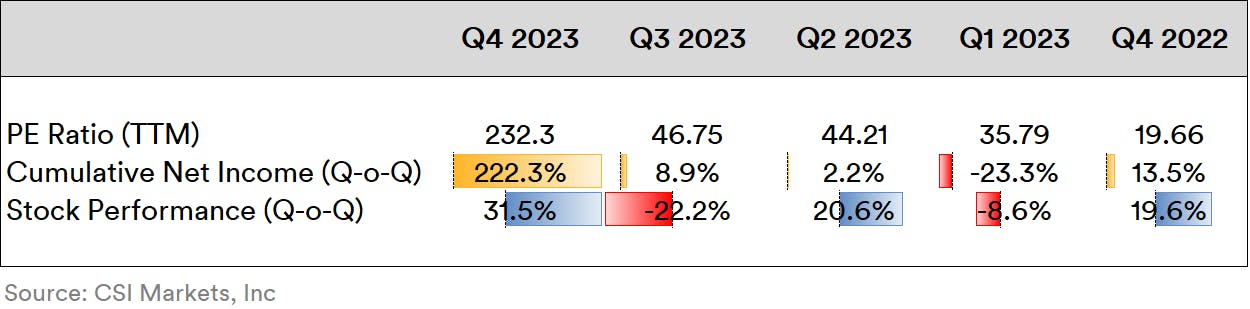
Until Q4 2022, market participants maintained a cautious outlook on this sector. Despite a challenging Q1 2023 for stock performance, investor enthusiasm led to a doubling of Price-to-Earnings (PE) Ratios compared to the previous quarter. Following a slight upward adjustment in the subsequent two quarters, substantial net income gains in Q4 2023 propelled the sector's PE aggregate to twelve times its value from a year earlier.
However, the company's position within this sector is mixed. Prior to the earnings release, NVIDIA ranked:
- 10th in PE Ratio, with California-based "fabless" chipmaker SiTime Corporation (SITM) claiming the top spot.
- 5th in Price-to-Sales (PS) Ratio, with Canada-based chip-scale photonic solutions provider Poet Technologies (Canadian ticker: PTK) leading the pack.
- 5th in Price-to-Cashflow (PCF) Ratio, with California-based semiconductor fabrication support specialist Ultra Clean Holdings, Inc (UCTT) taking the lead.
The Ugly: Rationalization Time
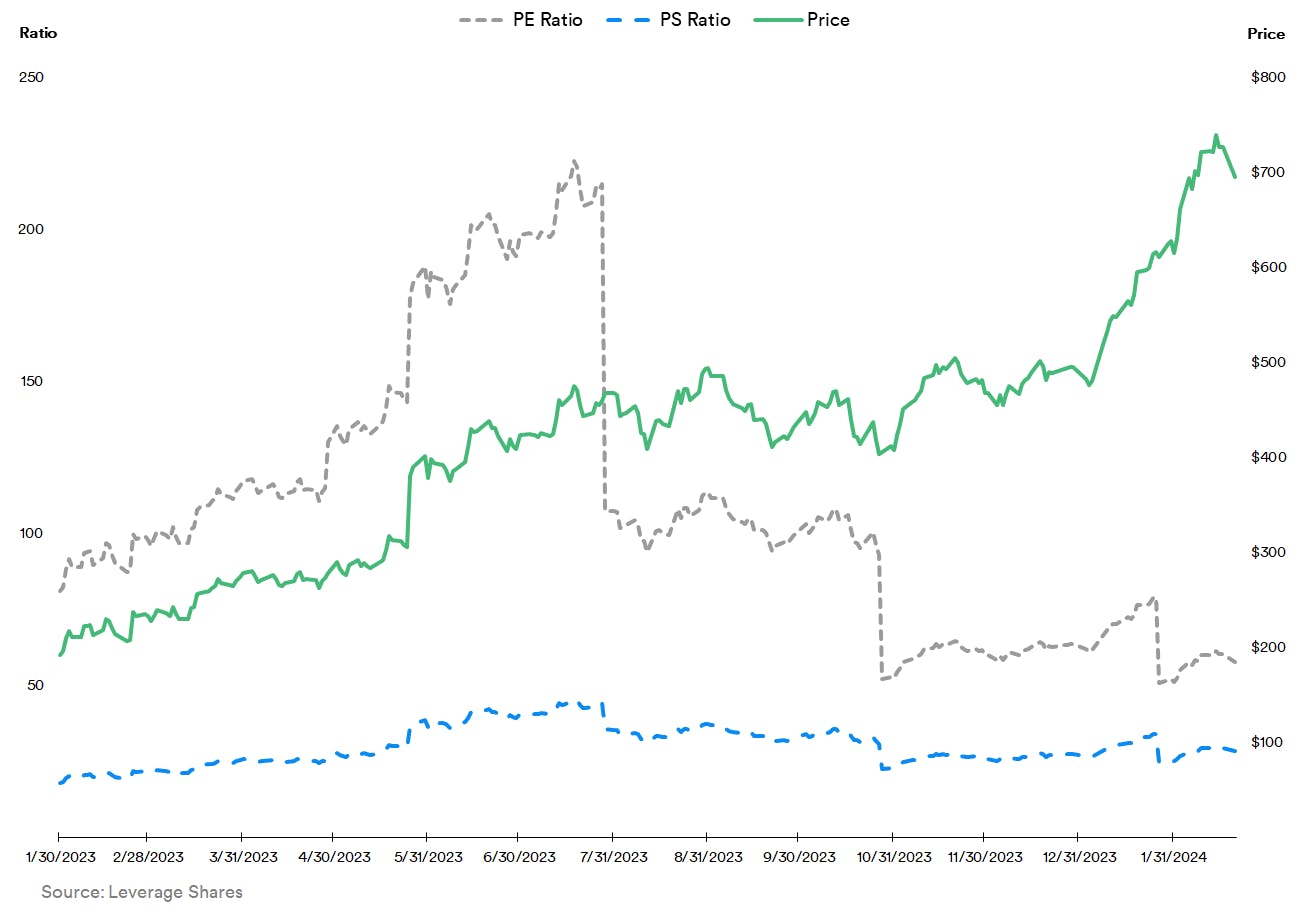
Just before the earnings announcement, the PS Ratio had dropped 38% from its peak of 45.5, and the PE Ratio had fallen 74% from a top of 222. Trading volumes usually hovered between 45 to 65 million, with exceptions during options expiry/rollover periods and earnings announcements.
Advertisement
When comparing this to the put-call interest ratio, the stock's prospects appear increasingly balanced. For the better part of 2023, the market sentiment was mostly negative regarding the stock's value. Yet, this year, it has moved towards a more neutral ratio of 1.
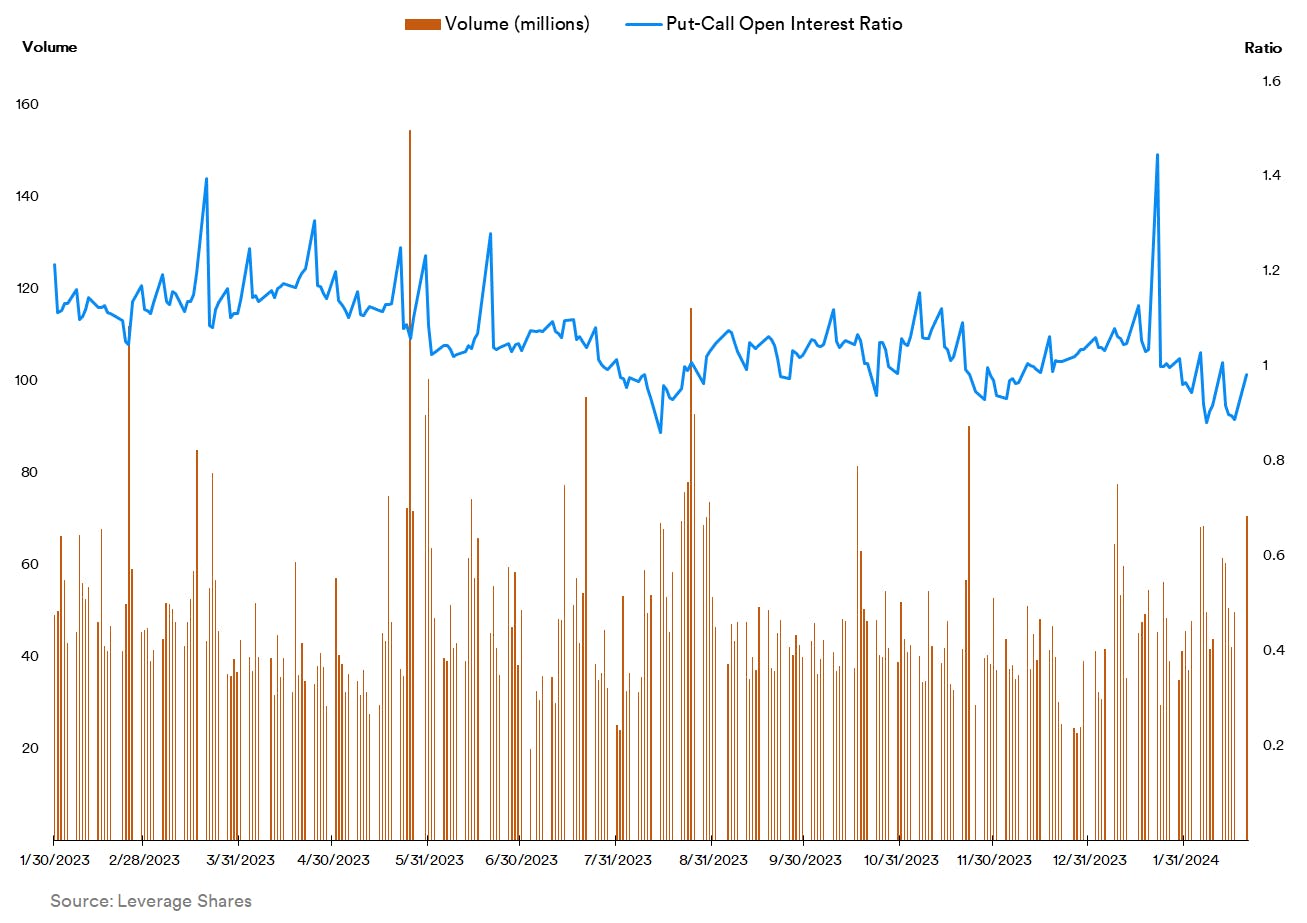
As the Price to Earnings (PE) Ratio became more reasonable, the Put-Call Ratio found equilibrium. Current trends suggest a continued effort to further adjust the PE Ratio downwards. The company primarily engages in design, with the majority of its manufacturing and assembly of various components being undertaken by the Taiwan-based TSMC.
With no universally accepted “architecture” and design heavily reliant on the specific application, the company's current peak success through aggressive corporate outreach and partnerships is tempered by the reality that competitors will always strive to enhance cost-efficiency and performance as required.
Another factor to consider is the issue surrounding the "Magnificent Seven," which has evolved into a sanctuary for investors primarily motivated by hype.
Economist David Rosenberg argues[1] that comparing the Magnificent Seven to dot-com stocks of the late 1990s is inaccurate because the former are generating profits.
A more apt comparison would be with the American "Nifty Fifty" from the 1960s and 1970s (distinct from the Indian index), which were largely profitable. Despite a significant drop of over 60% between 1973 and 1975, most of those companies have remained profitable to this day. Like the historical "Nifty Fifty," the Magnificent 7 plays a central role in driving today's market dynamics.
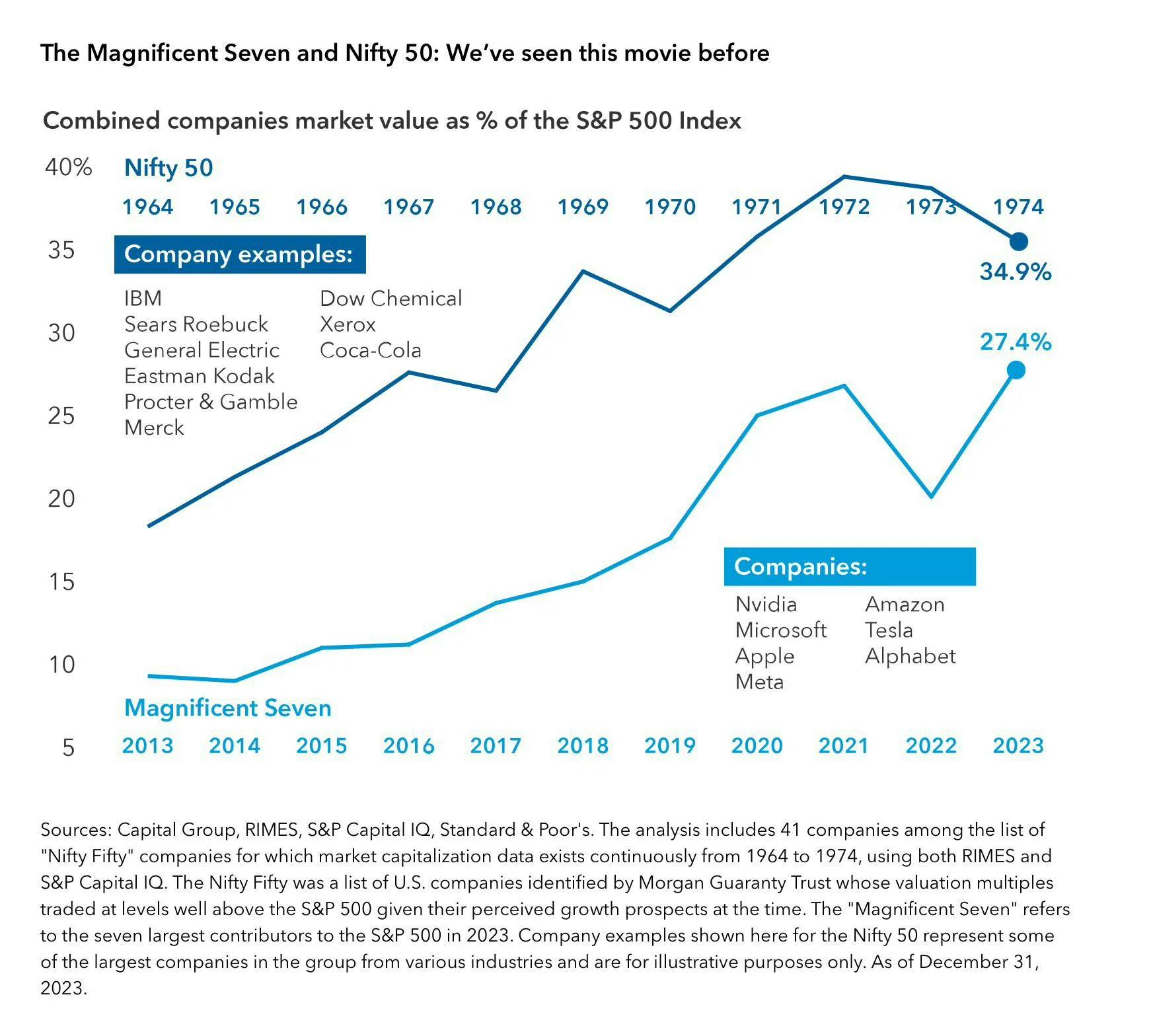
Similar to the situation with the "Nifty Fifty", it's time for rationalization.
Bottom line
When we look at it as a "company," there's optimism that our robust earnings will find stability in the near future. Our corporate cohesion tends to stay solid, although it's definitely influenced by factors like requirement scoping and managing costs. Plus, we're gearing up for an exciting array of corporate-focused hardware solutions in the year ahead.
Advertisement
However, as a "stock”, it's probably not going to keep those historically high premium ratios. Goldman Sachs' report[2] tells us that pretty much every one of the 722 hedge funds they surveyed – with a whopping $2.6 trillion combined in equity exposure – is scaling back their involvement with these stocks. It is expected that there will be a further correction of the PE Ratio by 40-50% from its current level, bringing it down to the mid-twenties to early-thirties range. Meanwhile, it's probable that stock repurchases will continue.
Disclaimer: Trackinsight does not guarantee the accuracy, completeness, or reliability of the information provided. The opinions expressed are those of the authors and are subject to change. Trackinsight will not be held responsible for any decisions made based on this information. It is advised to consult a financial advisor before making investment choices. By accessing this site, you agree to these terms.
About Leverage Shares
Leverage Shares is the largest European issuer of single stock ETPs by AUM & trading volume. It is the only provider of physically-backed leveraged ETPs on single stocks, ETFs and commodities.
Footnotes:
1. “Forget dot-com comparisons: The Magnificent 7 look like the Nifty 50 bubble that burst in the 1970s and sent the group tumbling 60%, famed economist says”, Markets Insider, 21 February 2024
[2] “Hedge Funds Cut Magnificent Seven in Last Quarter, Goldman Says”, Bloomberg, 21 February, 2024
The opinions expressed in this publication are those of the authors and are subject to change. They do not purport to reflect the opinions or views of Trackinsight or its members. Trackinsight does not guarantee the accuracy, completeness, or reliability of the information provided.
More articles


About Trackinsight
Since our founding in 2016, we have been at the forefront of the industry, delivering accessible, comprehensive, and reliable tools to support the evolving needs of investors.
Over the past decade, Trackinsight has expanded its operations across six countries, serving thousands of professional investors. We’ve consistently innovated to provide cutting-edge solutions that meet the changing demands of the ETF market.
In 2024, Kepler Cheuvreux, a leading independent European financial services firm, acquired a majority stake in Trackinsight, becoming the company's principal shareholder.
This strategic partnership solidifies Trackinsight's position as a premier provider of ETF selection and analysis tools, while strengthening Kepler Cheuvreux’s commitment to becoming a leading player in the ETF sector.
Together, we are committed to offering advanced services that empower professional investors, advisors, institutions, and issuers. This new step enables us to deliver even more comprehensive and innovative technological solutions, driving ETF investing to new heights.
More about TrackinsightETF TOOLS
PLATFORM
ETF NEWS & RESEARCH
Privacy policy | Cookie policy | | Terms of use | Imprint