Global ETF Survey 2026: Answer now →
Help us improve your experience. Please confirm your investor type:
Don’t Miss a Move in the ETF Market
Sign up and keep track of everything that moved the ETF industry this week. From new launches to regulatory shifts across the Atlantic.

Fact or Fiction: Could Trump's Second Term Trigger a Recession?
Sandeep Rao, a Quantitative Analyst at Leverage Shares, explored the potential economic risks, including recession, associated with Donald Trump's possible second term, highlighting market trends and vulnerabilities.


By Leverage Shares
July 22, 2024
- Leverage Shares
Advertisement
On the 13th of July, a bid on former U.S. President Donald Trump’s life in the course of an election rally in Butler, Pennsylvania was foiled at the cost of the attacker’s life and one rally attendee. President Trump, who was injured during the attack, was escorted out of the rally by his bodyguards as he defiantly raised his fist in the air to cheering crowds – arguably one of the most iconic images of the U.S. election in recent history.
Parallels were quickly drawn to fellow Republican Ronald Reagan, who was shot at by an assassin in 1981 and then went on to win his re-election bid in 1984 in an absolute landslide among the Electoral College.
ETF Data Built for Precision
Trackinsight delivers reliable and comprehensive coverage on 14,000+ ETFs

Image Credit: Evan Vucci | Associated Press
However, it deems noting that President Trump’s re-election prospects have been steadily bullish throughout his many trials and tribulations in the U.S. legal system, which was further cemented by his performance during his televised debate against the incumbent President Joe Biden.
In the history of televised debates between U.S. presidential contenders since 1960, the one held between Presidents Biden and Trump stood leagues apart from the first ever televised debate that was held between Richard Nixon and John F. Kennedy. In the first, participants were fairly convivial with each other while in the most recent one, participants were abrasive and held back from talking/shouting over each other by moderators muting each participant's microphone while the other was speaking. In the first, rebuttals were delivered with a modicum of calm and respect while in the latest, one contender called the other a "sucker" and "loser" with the "morals of an alley cat".
Viewers of the first-ever televised debate were fairly split on who made the best points; in the latest, overall viewer (and analysts') perception was that President Trump (born roughly one year after the end of World War II) sounded relatively much more coherent than President Biden (born roughly two years before the end of World War II) and little else by way of consensus. With President Joe Biden dropping out of the race on the 21st of July – a little over 100 days before votes are cast – and his party scrambling to promote a candidate to the same crescendo as he had been, President Trump’s chances might have improved even more.
During the course of this highly testy spectacle, President Biden had asserted the conclusions made in an open letter signed by 16 Nobel-winning economists released two days prior to the debate thus: "...if Trump is re-elected, we’re likely to have a recession, and inflation is going to increasingly go up."
The markers signifying a "recession" have been in place for some time. Market trajectories, meanwhile, are quite nuanced and not necessarily a prediction for a recession at first blush.
Markets versus Recession
Any notion that markets tank (or stay) during a recession could best be called a "misremembering": while markets do tend to drop at some point during a recessionary period, there is also a bullish trend for a substantial period of time.
Advertisement
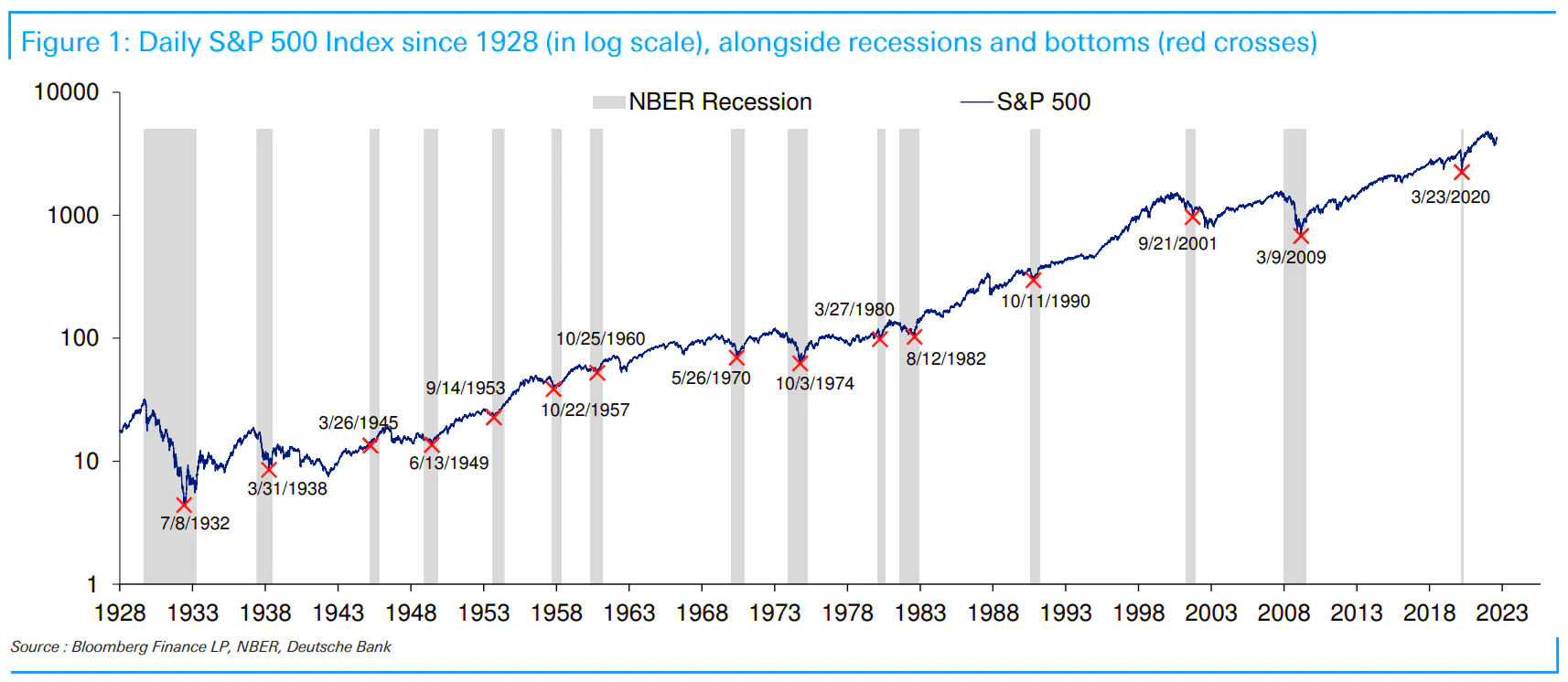
Even if it is argued that the "dot-com" bubble and the advent of tech stocks as a frontrunner for the U.S.' equity universe fundamentally changed market behavior and investor convictions, a trend that has generally persisted over a century has been that markets rapidly run high before tumbling and then picking up a bullish trend while a recession is still underway.
Standard Chartered Bank, in its recently released H2 2024 outlook, asserts that markets will remain mostly bullish till the end of the year. Of all major economic regions, overall U.S. equity valuations are deemed to be arguably justifiable on a forward-looking basis relative to return on equity. At a close second are Indian equities.
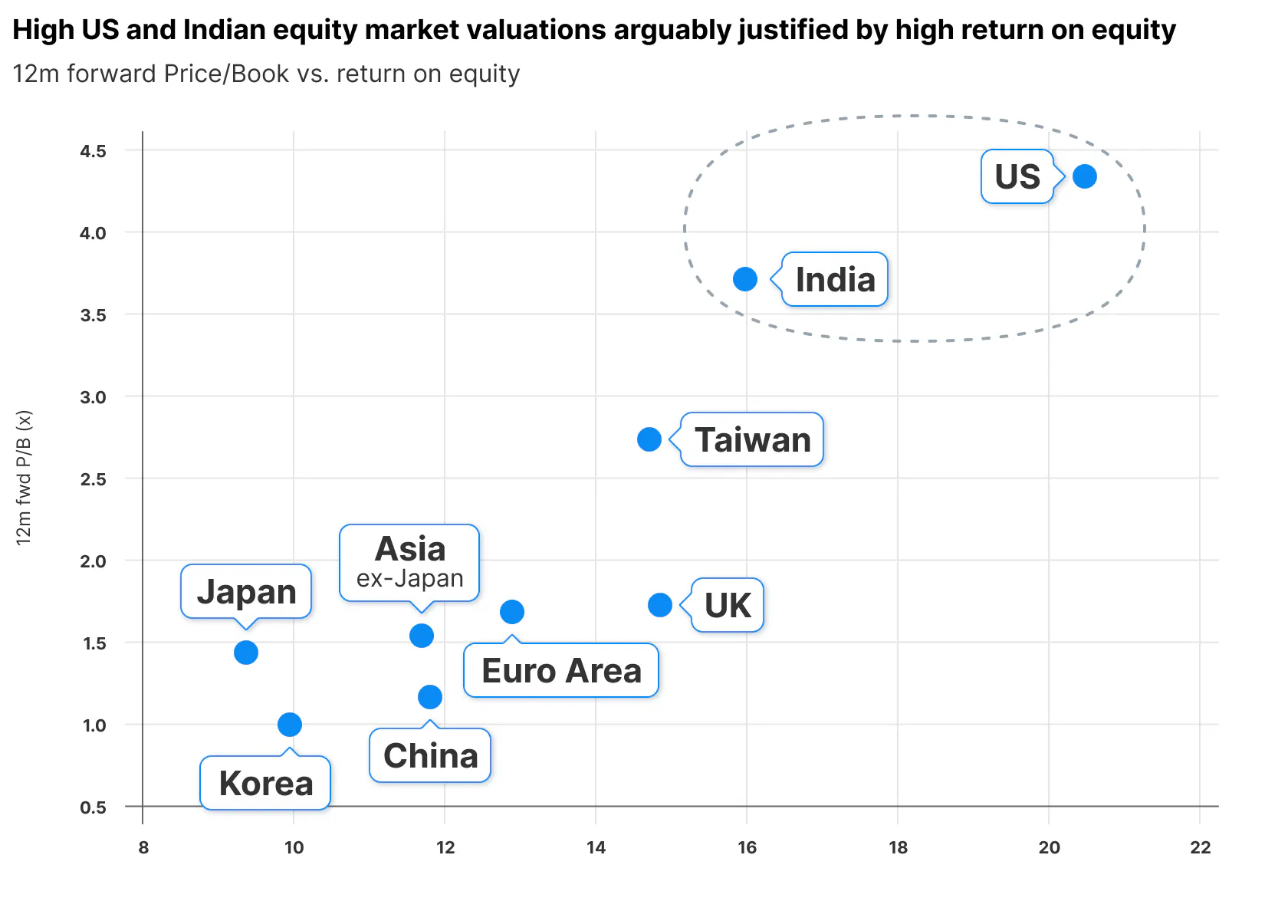
The valuation story between these two countries, however, are markedly different: Indian indices have been rising on a year-on-year basis for over a quarter century, with economic policies in place for over a decade that prioritize domestic production to meet rising consumption by a growing populace rising above the poverty line on now-record levels. The rise of the U.S.' S&P 500, on the other hand, could best be described as a flight of capital that has been increasing in volume.
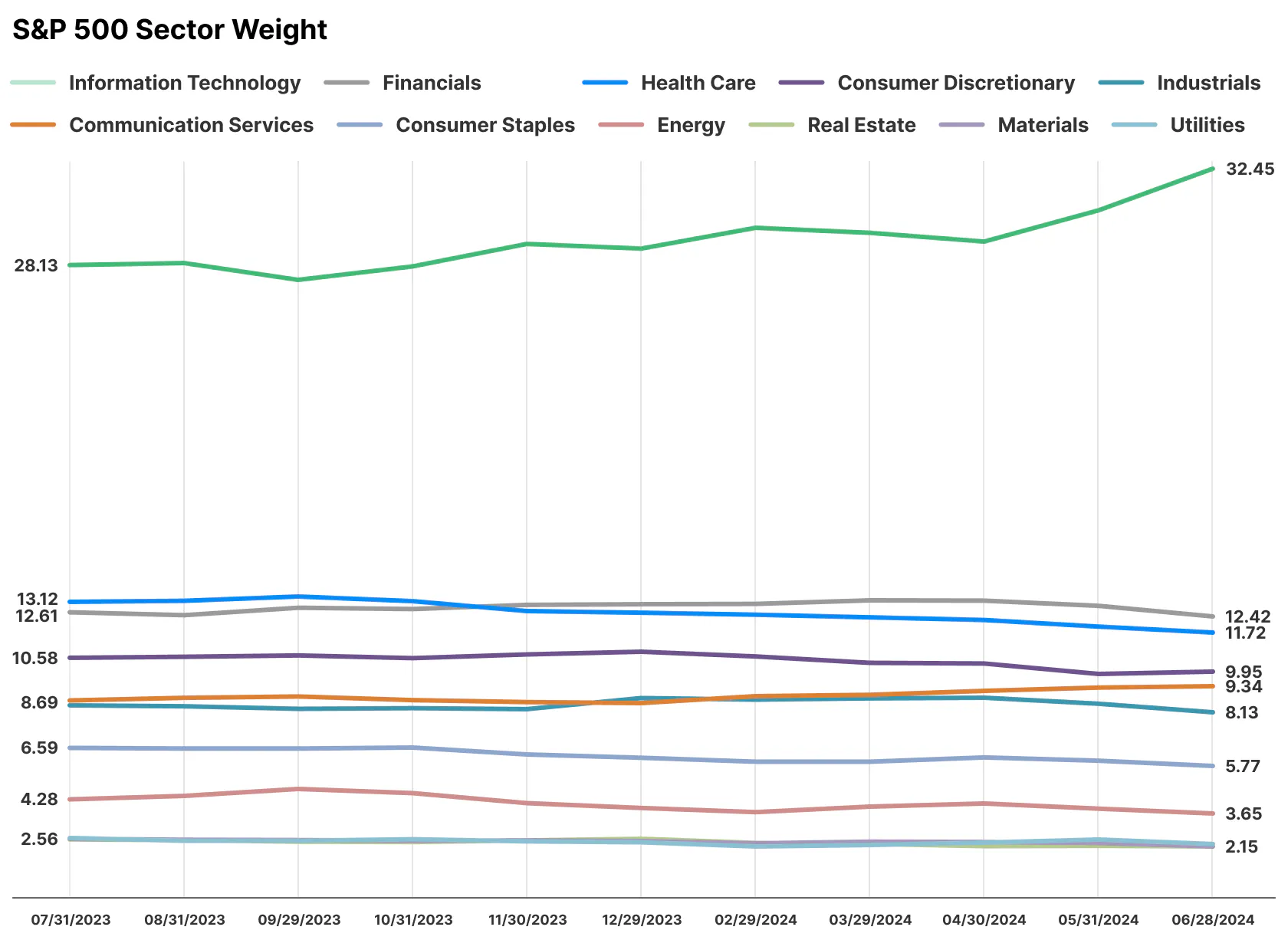
As early as H2 2023, "tech" - which employs nowhere close to the number of U.S. residents as many other service and product-related occupations - already accounted for well over a quarter of total index composition. As of H1 2024, it was well over a third. Over the past several years, "tech" had become increasingly more relevant to U.S. market trajectory at a cost to nearly every other sector of the American economy, global-facing or otherwise. Arguably only two other sectors have largely held their own in a more-or-less resilient fashion: energy and financials.
Within financials, however, all is not well. As per the Federal Deposit Insurance Corporation's (FDIC) Quarterly Banking Profile – which is published approximately 55 days after the end of each quarter – for Q1 2024, the number of banks in its "problem list" as well as assets held in them has grown by a little under twice in number and size respectively relative to the end of 2022.
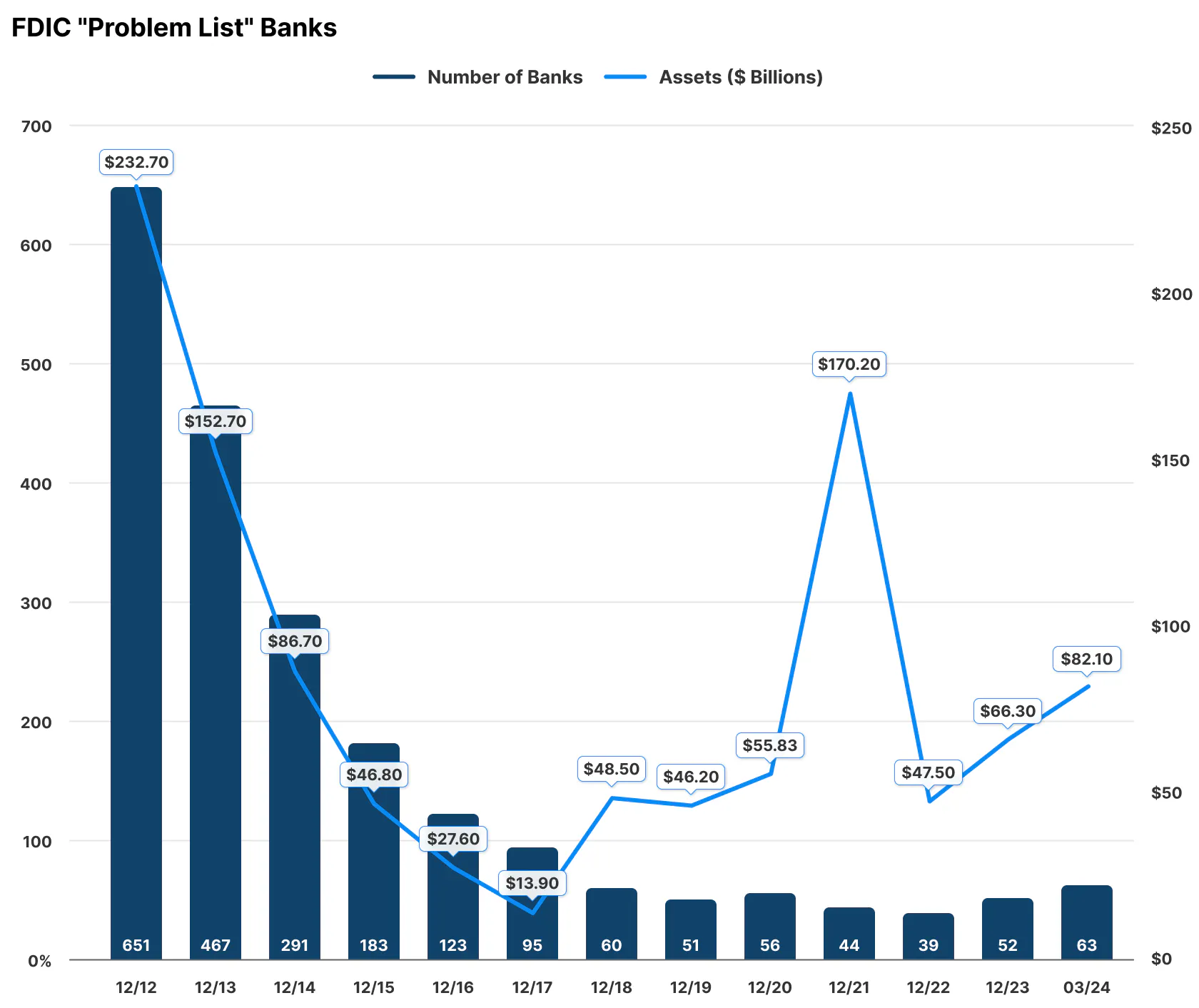
As of the end of Q1 2024, the FDIC listed a total of 4,577 banks in the U.S. After hiking rates 11 times through July, the Federal Reserve has yet to start cutting its "benchmark rate", leaving hundreds of billions of dollars of unrealized losses on low-interest bonds and loans on banks’ balance sheets which, when combined with potential losses on commercial real estate facing increasingly higher non-occupancy levels, leaves the banking sector increasingly vulnerable. Across Q1 2024, consulting firm Klaros Group analyzed 4,000 U.S. banks to gauge this combinatorial risk factor to arrive at the conclusion that 282 of those surveyed are likely to be in dire need of capital.
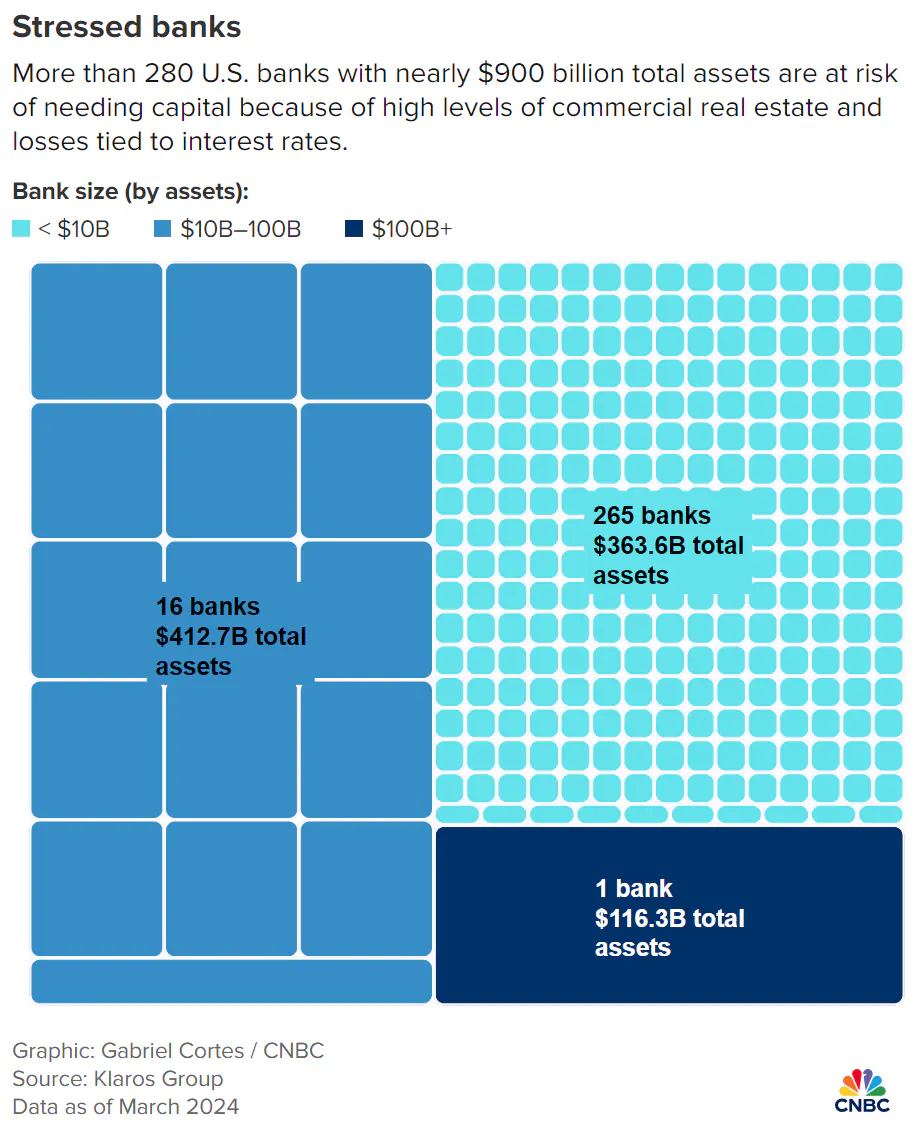
Be it in choice of publicly-listed equity or consumer bank, "size" seems to matter more than ever. Top-of-the-line "tech" companies have grown in their ability to attract investor conviction, with big banks and globe-spanning energy firms remaining resilient for the past few years and even showing a slightly bullish trend in conviction across the past two weeks.
Advertisement
The "flight of capital" to these massive companies, with top-of-the-line "tech" companies in particular attracting conviction multiples larger than the rest of the batch in their sector/cluster, cannot reasonably be construed as a sign of the markets being healthy. As it stands, both equity and foreign exchange (FX) volatility have been lower in 2024 relative to average volatilities seen in previous years.
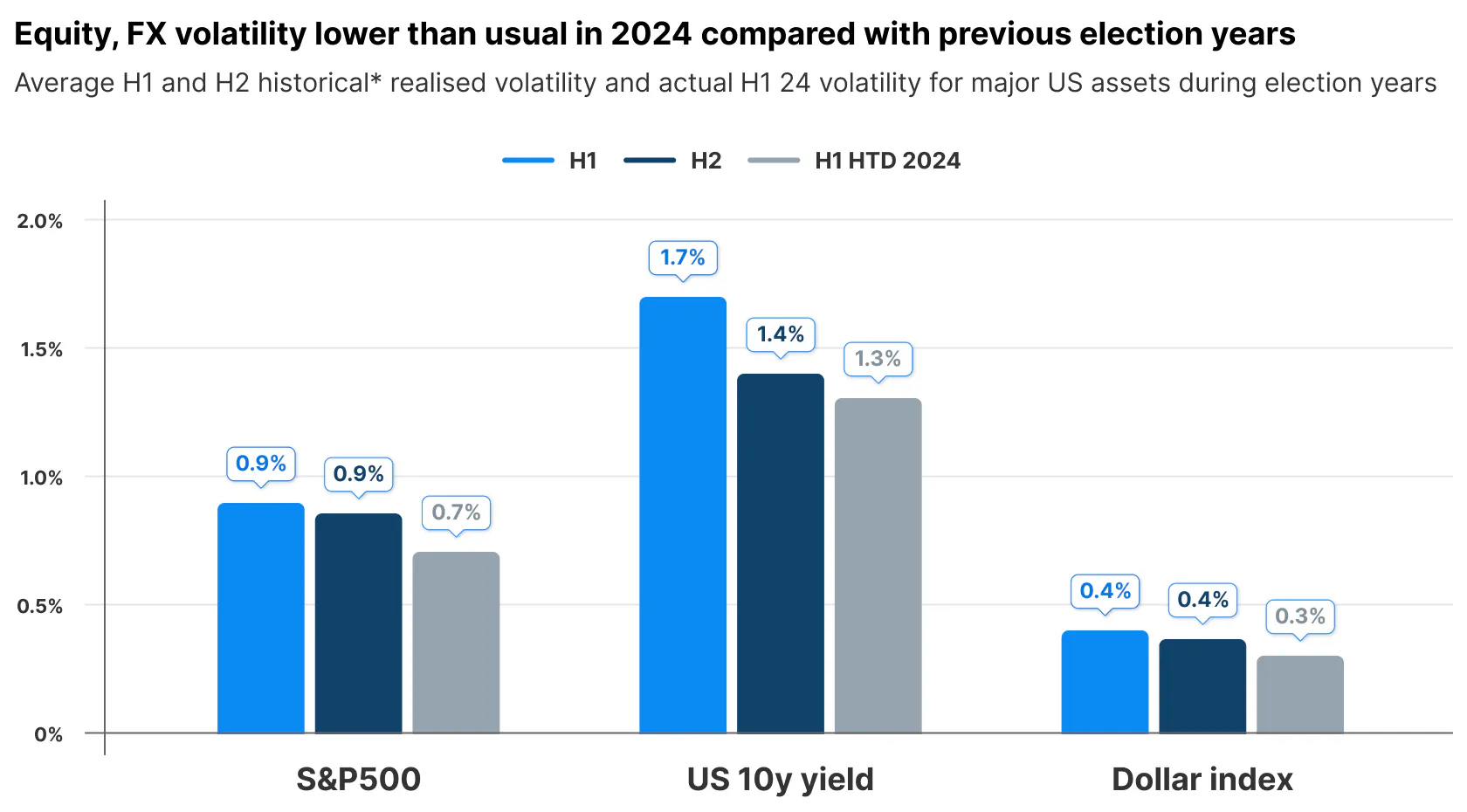
Volatility is a key measure of market health in that it could either indicate a high level of price discovery in play from diverse pool of market participants or a sense of panic/resignation by a shrinking pool of investors. Overall, market participation trends with respect to equity choices hint more of the latter than the former and more of a "resignation" as opposed to "panic".
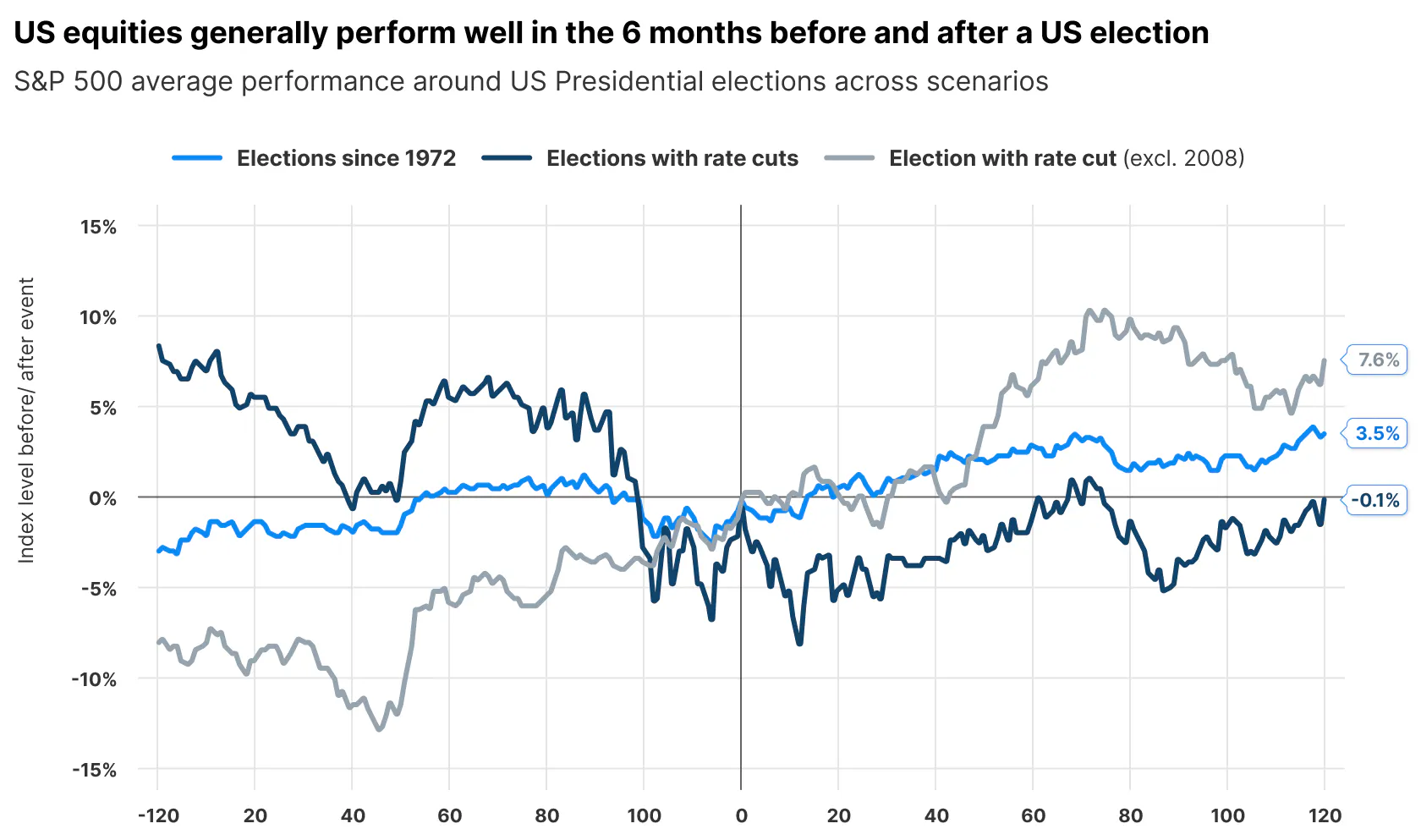
It also bears noting that, regardless of underlying economic conditions, market trends tend to be bullish both immediately before and after a national election in the U.S.
A "recession" is defined by the National Bureau of Economic Research (NBER) under very specific conditions, in which a softening labor market is a key requirement and is generally evidenced by the unemployment rate. There are early signs of a trend emerging here long before a second Trump presidential term has been determined.
Employment versus Recession
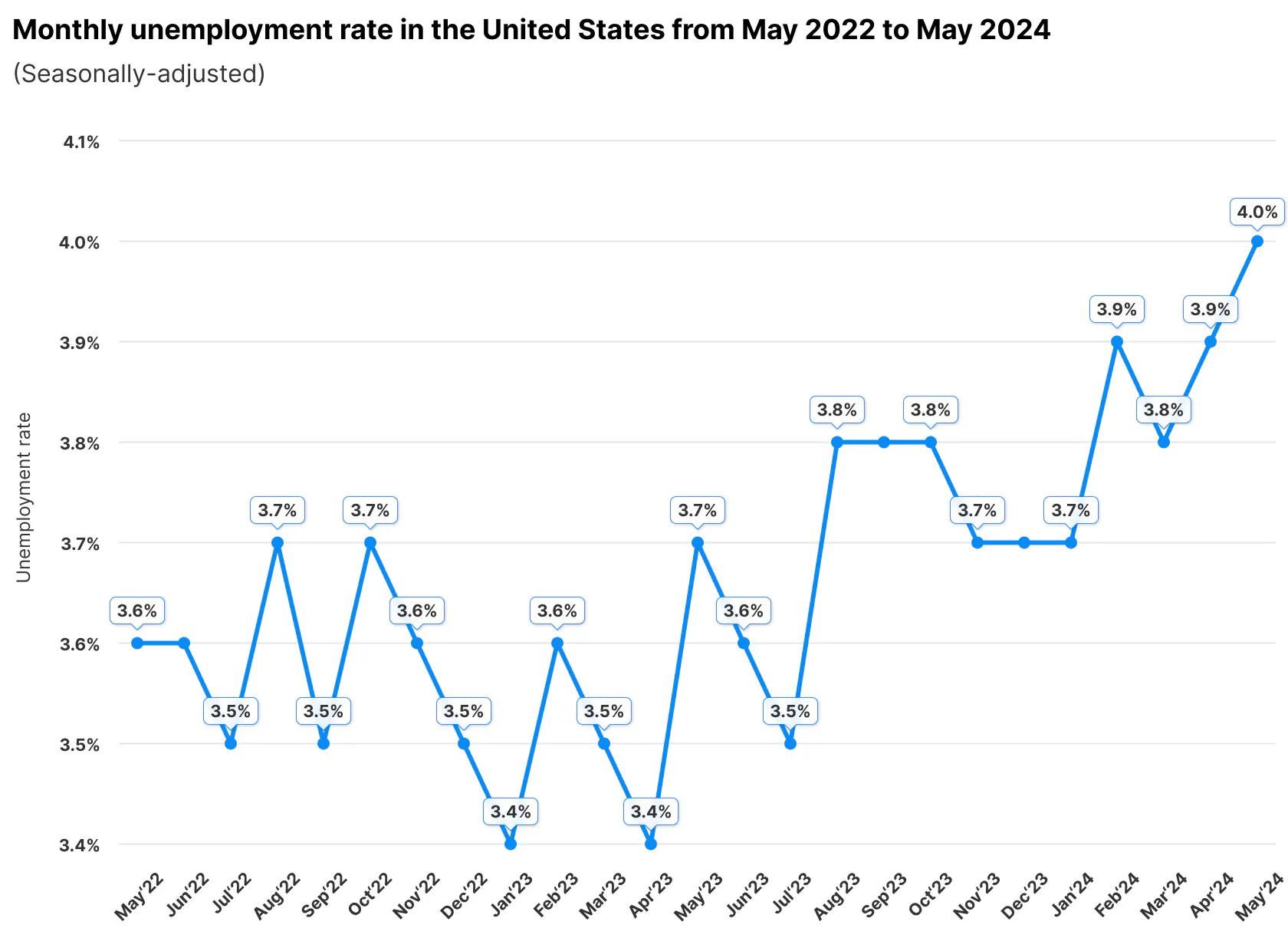
Given that economic health must factor in population participation, the unemployment rate is a key factor. In May 2024, the unemployment had risen nearly 11% relative to the same month in 2022 to reach 4%.
There's a clear striation in the employment levels vis-à-vis the nature of occupation: professional and managerial workers have the lowest level of unemployment while labor-driven professions have the highest.
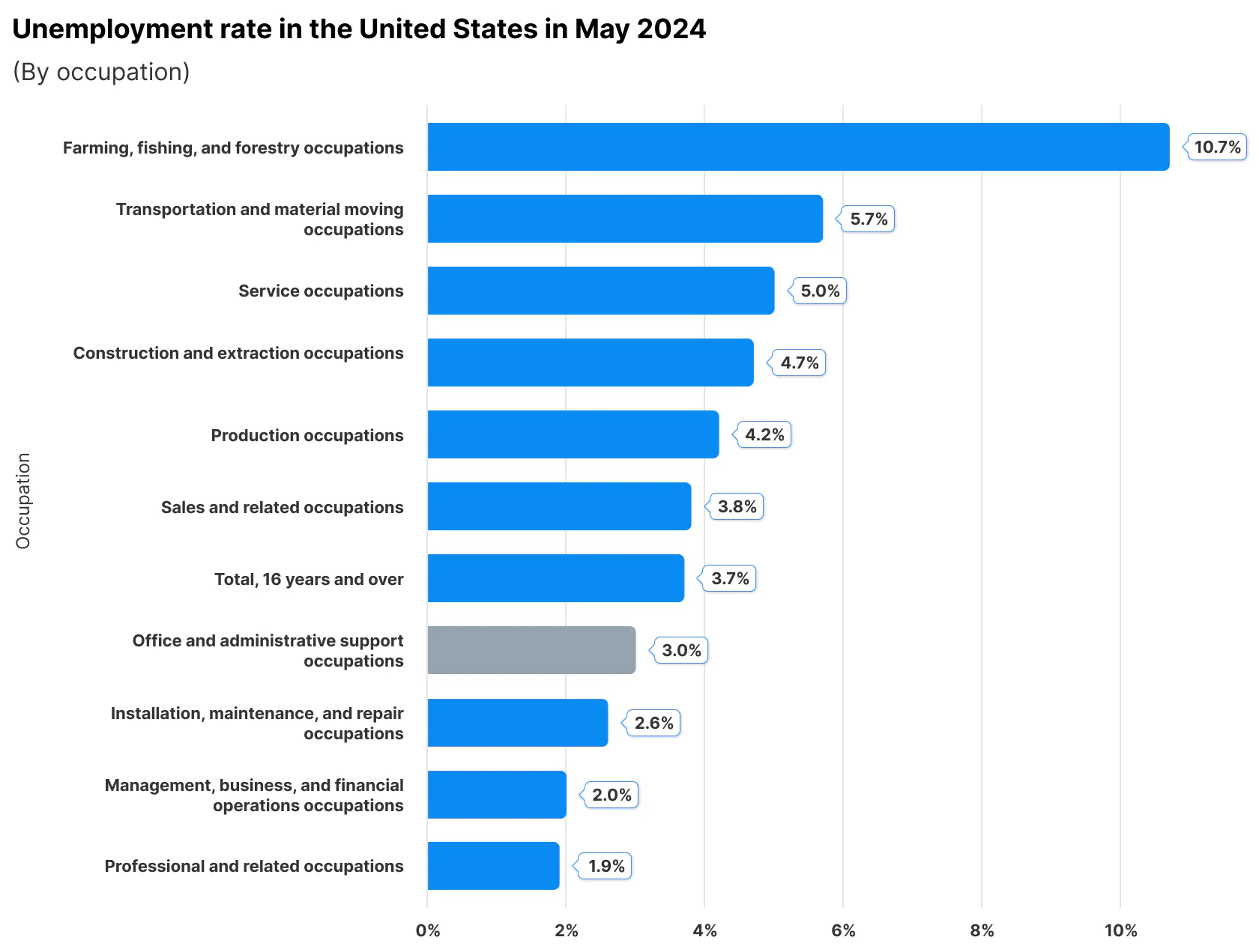
On the 5th of July, the U.S. Bureau of Labor Statistics (BLS) estimated June's unemployment rate at a slight uptick to 4.1%. This implies that unemployment rate has registered a resilient uptrend across Q2 2024.
The term "estimation" is entirely appropriate in this context. Rather than considering, say, the number of applicants filing for unemployment benefits versus those making 401k contributions, the filing of W2 tax forms by employers and so forth in a nation of more than 330 million people of which at least two-thirds are adults, the BLS calculates its metrics via a survey - a method in play since before World War II. The BLS currently samples 60,000 households across 2,000 pre-determined geographical areas, which translates to approximately 110,000 individuals.
Given the rise and rise of volatile "gig economy" jobs and the potential for disparate circumstances between survey respondents and other residents within said geometric area or representative population, it could be argued that – despite BLS' assertions regarding the accuracy of its methods – the true extent of unemployment cannot be or isn't currently being accurately depicted.
In Conclusion
To be fair to the 16 Nobel-winning economists, there is some merit in arguing that President Trump's promise to cut taxes would be the wrong direction to go in a country which adds around a trillion dollars of government debt on its populace every one hundred days. In a similar vein, cheap imports from China and other countries help prop up (and make affordable) sales in a country with the highest per capita consumption of nearly every major good and service. For President Trump to do so without lasting economic damage, it could be concluded that the way the U.S. government conducts itself (which is frequently a bipartisan consensus) and the way the citizen class consumes both need to change. This is necessarily an "evolution" rather than a "revolution"; the sooner it happens, perhaps the better.
While tax cuts might be a cause célèbre among his ostensible Republican colleagues on America's "Political Right", President Trump's positions aren't entirely orthodox. For instance, his promise to grant permanent residency to all foreign graduates of American universities is ostensibly a cause dear to his foes on the "Political Left". Unlike many other countries, however, the United States government isn't a monolith centered on the President's decision-making; parliamentary consensus is a long and byzantine road. As it is, his "green cards for foreign graduates" proposal was immediately and roundly rejected by leading lights among his ostensible colleagues. Thus, regardless of promises, it might be somewhat early to prognosticate economic risk for the United States solely on President Trump returning to the White House. Instead, it bears remembering that the seeds for economic stress have long been planted and steadily growing for a number of years now regardless of who was sworn into the White House.
About Leverage Shares
Leverage Shares is the largest European issuer of single stock ETPs by AUM & trading volume. It is the only provider of physically-backed leveraged ETPs on single stocks, ETFs and commodities.
The opinions expressed in this publication are those of the authors and are subject to change. They do not purport to reflect the opinions or views of Trackinsight or its members. Trackinsight does not guarantee the accuracy, completeness, or reliability of the information provided.
More articles


About Trackinsight
Since our founding in 2016, we have been at the forefront of the industry, delivering accessible, comprehensive, and reliable tools to support the evolving needs of investors.
Over the past decade, Trackinsight has expanded its operations across six countries, serving thousands of professional investors. We’ve consistently innovated to provide cutting-edge solutions that meet the changing demands of the ETF market.
In 2024, Kepler Cheuvreux, a leading independent European financial services firm, acquired a majority stake in Trackinsight, becoming the company's principal shareholder.
This strategic partnership solidifies Trackinsight's position as a premier provider of ETF selection and analysis tools, while strengthening Kepler Cheuvreux’s commitment to becoming a leading player in the ETF sector.
Together, we are committed to offering advanced services that empower professional investors, advisors, institutions, and issuers. This new step enables us to deliver even more comprehensive and innovative technological solutions, driving ETF investing to new heights.
More about TrackinsightETF TOOLS
PLATFORM
ETF NEWS & RESEARCH
Privacy policy | Cookie policy | | Terms of use | Imprint