Trackinsight is part of ETF One, the fully integrated ETF platform of Kepler Cheuvreux. Learn more →
Help us improve your experience. Please confirm your investor type:
The ETF Industry Is Evolving Fast
From AI infrastructure to active strategies, the ETF landscape is shifting. Share your perspective in the 7th Annual Global ETF Survey.
3 commodity ETFs to hedge against inflation
These ETFs offer exposure to a broad basket of different commodities.


By Tony Dong
December 15, 2022
- Commodies
Advertisement
A key component of most measures of inflation is an increase in the price of agriculture and energy inputs. Base metals like copper and iron, foodstuffs like soybeans, wheat, and corn, and energy sources like natural gas and crude oil can experience sharp demand shocks as inflation rises.
This has certainly been the case in 2022, with commodities as a broad asset class posting strong returns. Even commodity producer stocks like potash and pipeline companies have enjoyed strong performance, aided by improved earnings and cash flows.
ETF Data Built for Precision
Trackinsight delivers reliable and comprehensive coverage on 14,000+ ETFs
Still, commodity bulls will do well to remember the years of underperformance. Commodity prices can be volatile and cyclical. As an asset class, they did particularly poorly in 2008 during the Great Financial Crisis, fell hard in 2014 and 2015 due to demand-side shocks, and plummeted again in 2020 when oil prices briefly went negative.
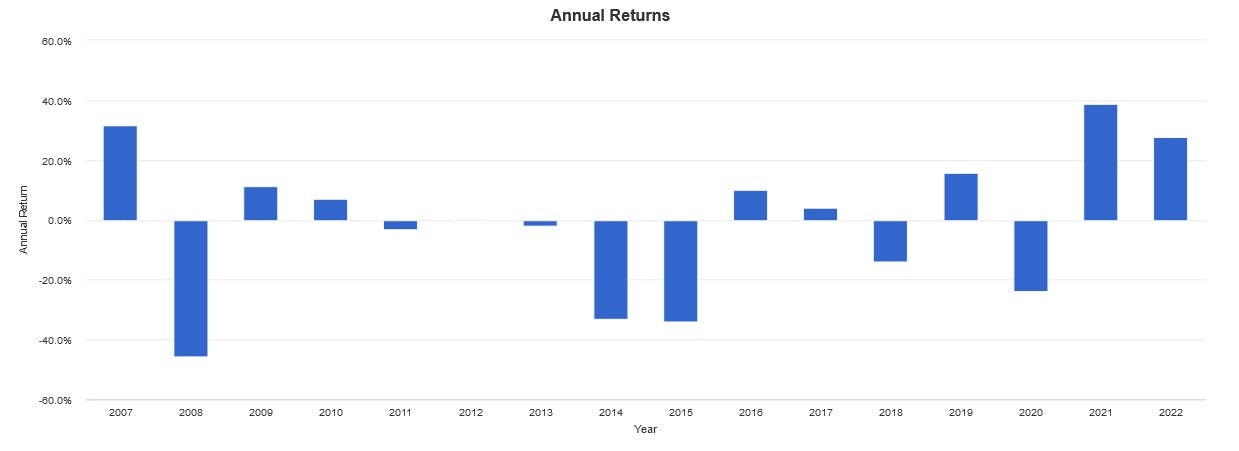
Still, a small allocation to commodities in a portfolio can provide diversification benefits, largely thanks to their resiliency to inflation and persistently low correlation with stocks and bonds. A good way to gain exposure is via ETFs that track a broad basket of different commodity futures. Here are my three picks.
Invesco DB Commodity Index Tracking Fund (DBC) / Invesco Optimum Yield Diversified Commodity Strategy No K-1 ETF (PDBC)
Both DBC and PDBC deliver exposure to a broad basket of commodities futures contracts by tracking the DBIQ Optimum Yield Diversified Commodity Index Excess Return Index. This is a rules-based index that holds 14 futures contracts representing the most traded commodities.
Currently, this basket contains NY harbor USLD, brent crude, gasoline, WTI crude, gold, natural gas, sugar, soybean, corn, wheat, zinc, aluminum, copper, and silver futures, and U.S. Treasury bills as collateral for them.
The main difference between DBC and PDBC is in their legal structure. While DBC is structured as a commodity pool (otherwise known as a limited partnership), PDBC is structured as an open-ended fund per the Investment Company Act of 1940. Investors who buy DBC must therefore fill out a Schedule K-1.
In general, DBC makes for a better hold in taxable accounts due to its lower distribution yield. PDBC doesn't spit out a K-1 but pays out massive distributions. In terms of fees, PDBC is cheaper with a 0.62% net expense ratio compared to DBC at 0.87%.
iShares S&P GSCI Commodity-Indexed Trust (GSG)
A popular alternative to DBC is GSG, which also provides broad commodities exposure. Now, GSG isn't exactly an ETF. The fund is not an investment company registered under the Investment Company Act of 1940 – and therefore not subject to the same regulatory requirements as ETFs registered under the Act - so investors should be aware of that.
GSG tracks the S&P GSCI(R) Total Return Index, which tracks energy, industrial and precious metals, agricultural, and livestock futures markets. It's collateralized much like DBC is via Treasury Bills. The actual composition and methodology of the index itself can be found here on S&P Global's website.
Advertisement
GSG charges a sponsor fee of 0.75%, which is essentially its version of an ETF expense ratio. International holders of GSG and those trying to claim a foreign tax credit should also be aware of the possible need to fill out a Schedule K-3 for U.S. tax reporting requirements, in addition to a K-1.
Direxion Breakfast Commodities Strategy ETF (BRKY)
A less diversified but highly interesting commodity ETF that was recently launched is BRKY, which tracks the S&P GSCI Dynamic Roll Breakfast (OJ 5% Capped) Index. Unlike DBC/PDBC or GSG, BRKY does not include any base metal or energy futures contracts.
Rather, the ETF only holds food-based commodities related to breakfast meals, which currently include corn, coffee, lean hogs, orange juice frozen concentrate, sugar, and wheat, weighted by their global market concentrations (aside from OJ, which is capped at 5%).
Currently, corn is the largest holding at 40%, followed by wheat at 27% and lean hogs at 11%. BRKY's index is rebalanced annually and employs a tactically managed monthly rolling strategy for its futures contracts to minimize the effects of contango. BRKY's expense ratio is 0.70%.
Disclaimer: This article is limited to the dissemination of general information pertaining to investment strategies and financial planning and does not constitute an offer to issue or sell, or a solicitation of an offer to subscribe, buy, or acquire an interest in, any securities, financial instruments or other services, nor does it constitute a financial promotion, investment advice or an inducement or incitement to participate in any product, offering or investment.
More articles


About Trackinsight
Since our founding in 2016, we have been at the forefront of the industry, delivering accessible, comprehensive, and reliable tools to support the evolving needs of investors.
Over the past decade, Trackinsight has expanded its operations across six countries, serving thousands of professional investors. We’ve consistently innovated to provide cutting-edge solutions that meet the changing demands of the ETF market.
In 2024, Kepler Cheuvreux, a leading independent European financial services firm, acquired a majority stake in Trackinsight, becoming the company's principal shareholder.
This strategic partnership solidifies Trackinsight's position as a premier provider of ETF selection and analysis tools, while strengthening Kepler Cheuvreux’s commitment to becoming a leading player in the ETF sector.
Together, we are committed to offering advanced services that empower professional investors, advisors, institutions, and issuers. This new step enables us to deliver even more comprehensive and innovative technological solutions, driving ETF investing to new heights.
More about TrackinsightETF TOOLS
PLATFORM
ETF NEWS & RESEARCH
Privacy policy | Cookie policy | | Terms of use | Imprint